
The Rise and Fall of the “Third Place”
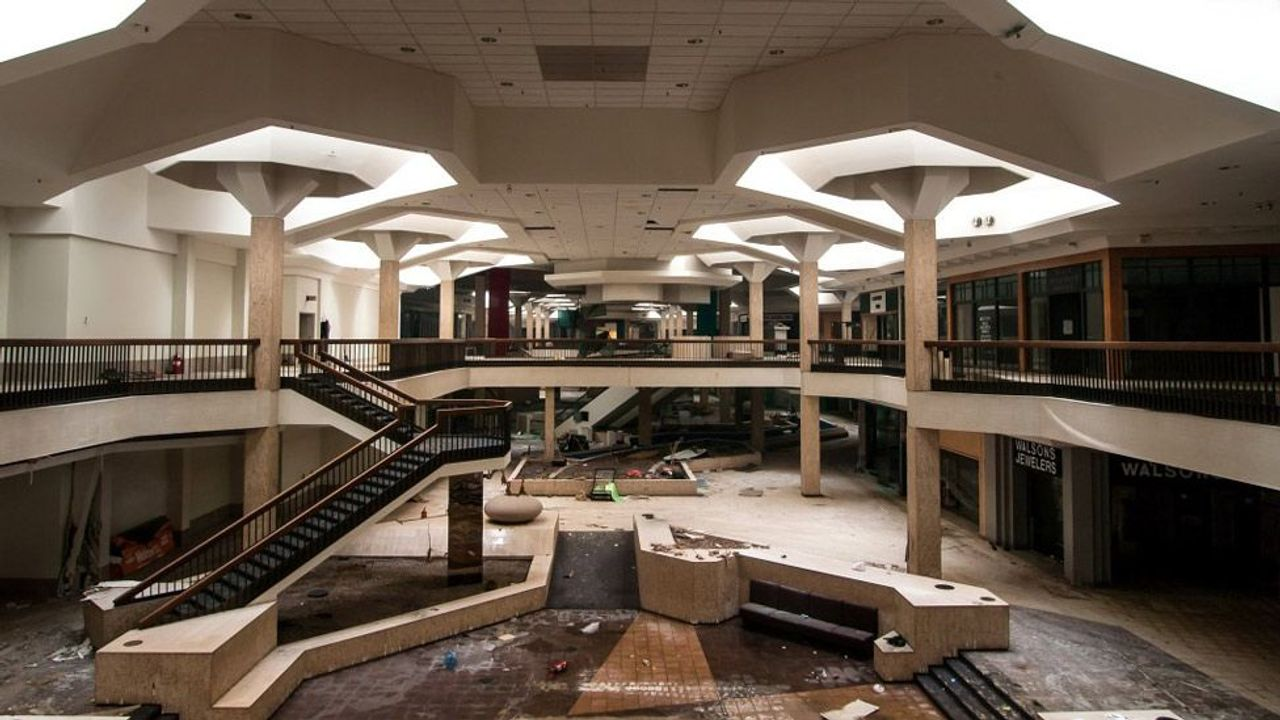
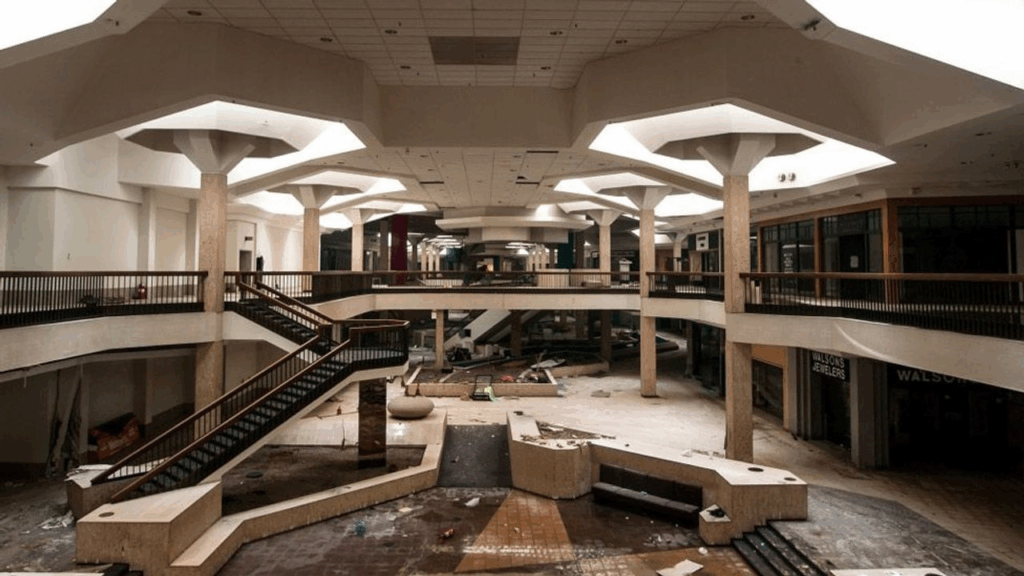
There are over 300 large, vacant structures across the United States where you’ll find empty corridors, functional escalators and elevators, and even some of the original mall lighting fixtures still intact — but everything else is eerily silent. These are America’s abandoned shopping malls. They represent a lost American dream that offered consumers an abundance of convenience, leisure, and a sense of community. Today, they stand as physical symbols of a culture that mistakenly believed it could engineer community through consumption.
Victor Gruen, an Austrian-born architect, developed the idea of the “third place” when he created Southdale Center in Edina, Minnesota, in 1956. Gruen envisioned shopping malls as climate-controlled town squares for suburban dwellers. Not only did Gruen envision the malls to be filled with shops, he also envisioned them to include public art, water feature,s and greenery along with areas for people to gather socially.
However, Gruen’s dream was short-lived. Retail developers realized they could make money by taking Gruen’s original third-place vision and turning it into a private, consumption-based environment that mimics the characteristics of a public space but lacks any actual publicness. Gruen eventually disowned the mall concept altogether because of the way it had been commercially exploited.
Shopping malls defined suburban America by the late 20th century. Teens hung out in food courts, Seniors would walk laps around the upper level as a form of exercise, and families would spend an entire Saturday browsing the many floors of these retail environments. However, the same excessive nature that led to the mall’s popularity would eventually contribute to its downfall. The proliferation of online shopping, changes in demographics and a steady decline in the number of suburban residents contributed to a massive decline in the number of shoppers visiting these once busy environments.
According to a 2023 Credit Suisse report, approximately 25% of U.S. malls could potentially close by 2030. This represents an enormous drop in an era of both architecture and cultural geography.
Dead Malls as Cultural Landscapes
Photographers such as Seth Lawless, Johnny Joo, and Dan Bell have visually documented the interior spaces of abandoned malls. These photographs feature overgrown plant-filled atriums, moss-covered food court seating areas, and the sounds of dying HVAC systems emanating from empty anchor stores.
Historians of cities and suburbs interpret the ruins of these malls as examples of post-consumer archaeology – the study of what remains after capitalism has performed its function. “Every mall,” according to author Alexandra Lange, “was a city pretending not to be one.” Therefore, when the malls fail, “we’re left with the shape of something we never quite built.”
What Lange refers to as “the shape of something we never quite built” is the civic identity of the mall. The mall was intended to serve as a surrogate downtown for communities that lacked an authentic downtown. The loss of these malls, therefore, illustrates the cost to society of replacing urbanity with privately owned, non-public space. When the malls cease to exist, the illusion that community can be manufactured through commerce is destroyed.
Rebirth of Dead Malls
Although the death of the mall represents a major loss, it does not represent the final chapter in the history of malls. A new architectural movement known as “adaptive reuse” is emerging from the ruins of dead malls. Designers across the country are converting obsolete malls into new civic, educational, and ecological infrastructure.
For example, Highland Mall in Austin, Texas, is currently being used as the main campus for Austin Community College. In addition to providing students with classrooms, the campus includes green courtyards, public art, and other amenities within the walls of what used to be a retail corridor. Similarly, an old Sears building in Chattanooga, Tennessee, is being repurposed as an innovation center that provides a mix of office, retail, restaurant, and entertainment uses. Finally, several JCPenney and Macy’s are being repurposed as delivery facilities, indoor farms, and senior housing.
Several architectural firms, including Gensler, SHoP, and DLR Group, have taken on the task of converting the closed malls into more open and well-lit environments. This is often referred to as reprogramming the malls to provide a better quality of space for users. Reprogramming is extremely difficult, however, due to the fact that the malls were originally designed to be closed, self-sustaining ecosystems that provided all of the necessary services and amenities for their users.
Despite the technical difficulties of reprogramming the malls, there is great potential to convert these large, introverted buildings into highly adaptable, open, and light-filled environments that can accommodate multiple uses in dense urban settings.
In addition to providing additional space and amenities for users, some designers are also attempting to convert the mall ruins into ecological experiments. For example, a proposal to convert a defunct mall in Cleveland, Ohio, into an urban wetland system that uses roof runoff to create a living laboratory for climate adaptation studies was presented in 2021.
Civic Reckoning
The decline of the mall reflects the larger trends in how Americans live and interact with each other. Historian Margaret Crawford noted in Building the Workingman’s Paradise (1995) that the suburban landscape was built upon the premise of providing suburbanites with a high degree of autonomy and privacy; however, that privacy has proven to be a double-edged sword that has resulted in a sense of disconnection among suburban residents. The malls were designed to mitigate this disconnection by creating simulated urban environments that were accessible to suburban residents. The emptiness of the malls today is a stark reminder of what occurs when the primary focus of spatial design is placed on serving the interests of market forces rather than the needs of people.
Ruin and Resource
The dead mall is a paradox – it is simultaneously a ruin and a source of potential. It represents both the failure of a particular economic model and the potential for rebirth in a different form. The dead mall is a call to action – it encourages us to move past nostalgic notions of what the malls were and to see the remnants of the malls as unfinished cities that require further development.
Designing for Longevity
One of the most important questions raised by the existence of the dead mall is an ethical rather than aesthetic one. The question of whether or not architecture should last longer than the need for which it was built is a complex issue. Modernist architecture, for example, was based on the principle of designing for longevity and permanence. Conversely, the rapid evolution of consumer culture has resulted in the constant need for companies to renew themselves. The decline of the mall represents the tension between these two competing philosophies.
In response to the decline of the mall, some architects are beginning to advocate for a type of temporal architecture. Temporal architecture is designed to allow for multiple forms of use over long periods of time – essentially, designs that can evolve as the needs of society change. In this sense, the malls represent early versions of megastructures that may be able to be repurposed for future generations.
If the 20th century represented a period of building for consumption, the 21st century may represent a period of building for resilience.
Conclusion
Ultimately, the architecture of abandonment is the architecture of reflection. The empty malls remind us that space is never neutral—it is always representative of a society’s values, economies, and imagination. How we choose to utilize these empty spaces will demonstrate not only the direction of the architecture profession, but also the direction of the concept of community in American society.
The echoes of possibilities remain within the corridors of the abandoned malls.
Sources:
- Victor Gruen, The Heart of Our Cities (1964)
- Alexandra Lange, Meet Me by the Fountain: An Inside History of the Mall (Bloomsbury, 2022)
- Credit Suisse, Retail Trends Report (2023)
- Johnny Joo, Empty Spaces: Photographs of America’s Abandoned Malls (2021)
- Gensler, Highland Mall Redevelopment Case Study (2020)
- Margaret Crawford, Building the Workingman’s Paradise (Verso, 1995)
- Journal of Urban Design, “Reclaiming the Dead Mall: Adaptive Reuse in Suburban Contexts” (2022)