

Historically, silence represented a spiritual or aesthetic quality. Still, in modern design, it has become the subject of architectural exploration, a material phenomenon that can be measured, reacted to, structured, and designed. As cities thunder ever louder and denser, architects and urban planners address how environments of silence impact health, thought, and the well-being of the group. The newly unfolding realm of acoustic architecture studies how sound and silence can be put to work in defining both physical and emotional spaces.
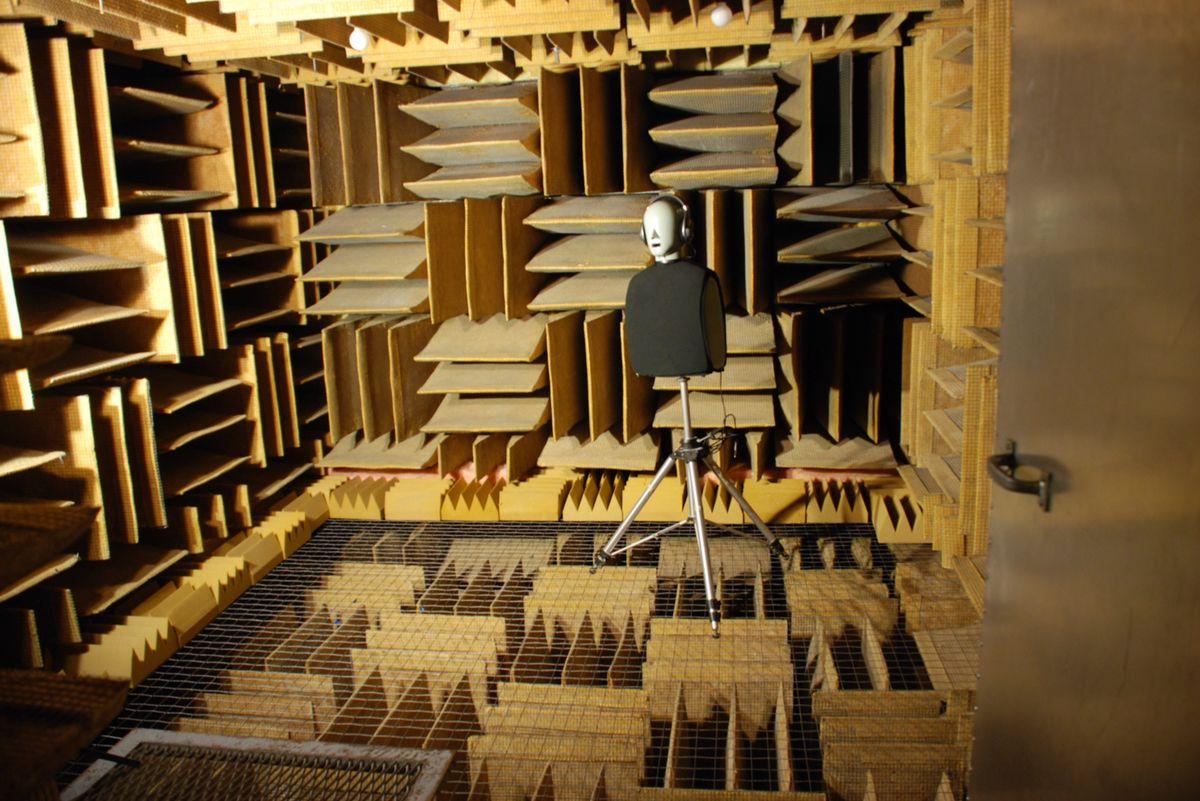
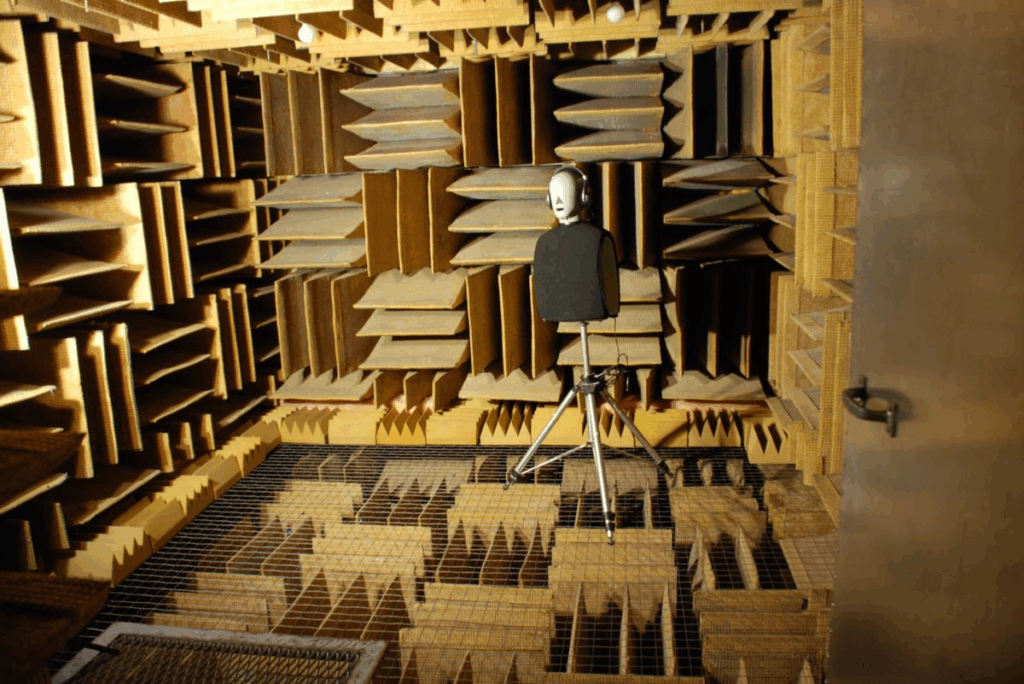
The anechoic chamber of Orfield Laboratories in Minneapolis, built in 1959 and registered at 9.4 decibels below zero in sound, is one of the best-known examples of realized silence in architecture. It is built with fiberglass wedges 3.3 feet thick and concrete walls, isolated from each other, to absorb the reflections of no less than 99.99 per cent of sound (Orfield Laboratories, 2015). The design of this chamber has been studied by the American Navy, NASA, and psychoacoustic researchers, who have indicated that prolonged exposure to, for example, the total silence of the anechoic chamber can induce hallucinations, dizziness, and a state of perceptual confusion. This seems to indicate that silence produces a restorative effect in moderate amounts, but that the complete deprivation of sound-space leads to a lack of the brain’s perceptual equilibrium.
Contemporary designers are embodying the effects of graduated quiet rather than silence. The Helsinki Central Library Oodi by ALA Architects embodies this idea, producing sound based on zones and their locations, with public activity on the lower floors ensuring stillness. In contrast, the upper floors are more replete with tones of reading and meditation. Acoustic engineer Tapio Lokki, whose research at Aalto University informed the design, describes Oodi as “a gradient of quiet—one that fosters both conversation and contemplation” (Lokki, 2019). Previous wood panels, acoustic baffles, and soft, more absorbent textiles provide the benefits of an acoustically favorable environment, while retaining a sense of openness, thus producing a quiet choreography of sound and no sound.
Silence, too, plays a metaphysical and philosophical role in architecture. Tadao Ando’s Church of Light in Ibaraki, Japan (1989), illustrates how absence can become form. The crossing, at right angles, of two beams of light and their junction on a bare concrete surface results in what Ando termed “a dialogue between material and immaterial.” Silence here becomes an amplifier for the natural sounds—the echo of footfall, the rhythm of breath. The design of the church thus changes the act of listening into that of meditation and connects architecture to the inner life.
At the urban scale, silence is now understood as an expression of environmental justice. The World Health Organization (WHO, 2018) has found that chronic exposure to the urban noise of highways and airports, in particular, produces commensurately increased rates of hypertension, sleep disturbance, and cognitive impairment in the young. These deleterious effects are caused by the proximity of low-income communities to transport corridors. In response to these findings, cities like Paris and Barcelona have instituted sound maps and quiet zones to identify and preserve acoustic comfort habitats (European Environment Agency, 2020).
Recent research in soundscape ecology has enlarged the purview of the architectural definition of silence. Instead of seeking to eliminate sound, designers now cultivate acoustic diversity —the balanced coexistence of natural, social, and mechanical sounds. Research published in the journal Frontiers in Psychology (Aletta & Kang, 2019) indicates that pleasant soundscapes, such as the rustle of leaves or the flow of water, favor positive mood regulation and the restoration of attention. The design of quiet, thus, is not the elimination of sound, but the cultivation of it.
To design for silence is to design for awareness. It is to work against the modern obsession with vision and spectacle, and to advance architecture toward an ethic of listening. As the acoustic ecologist Gordon Hempton has written, “Silence is not the absence of something, but the presence of everything.” In this sense, the architecture of silence is not empty. It is full of attention, restraint, and care.
Sources:
- Orfield Laboratories. “Anechoic Chamber.” 2015.
- Lokki, Tapio. “Designing Acoustic Comfort in Public Libraries.” Aalto University Research Review, 2019.
- World Health Organization. Environmental Noise Guidelines for the European Region. WHO Regional Office for Europe, 2018.
- European Environment Agency. “Quiet Areas in Europe: The Environment Unseen.” 2020.
- Aletta, Francesco, and Jian Kang. “Soundscape Approach Integrating Noise and Well-being in the Built Environment.” Frontiers in Psychology, 2019.
- Hempton, Gordon. One Square Inch of Silence. Free Press, 2009.