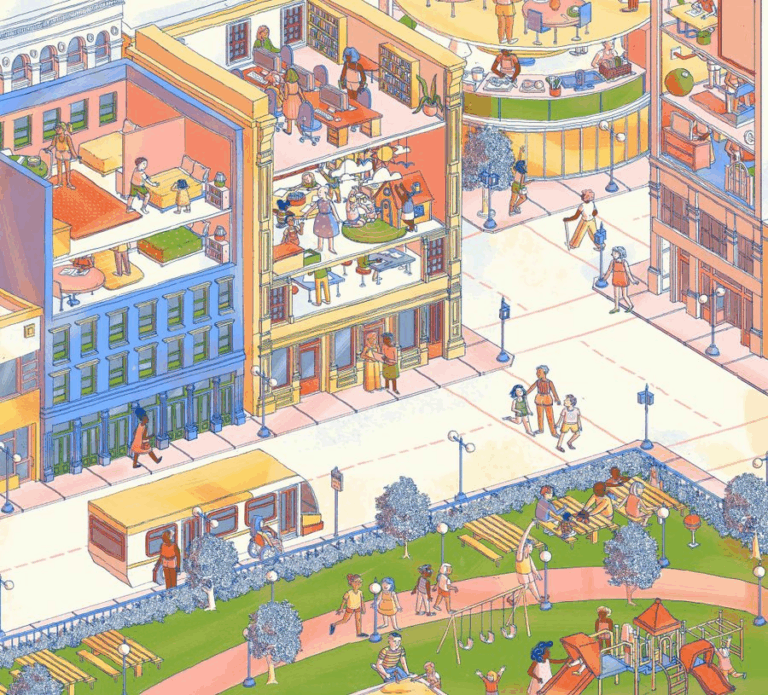

Cities often create opportunities for efficiency: models of grid roads, towers of office space, blocks of development. But what happens to cities when designers think about play? There is a growing, global network of “architectural playgrounds” that re-invent public space not just for means of transit but for swinging, jumping, and climbing.
A History of Playful Design
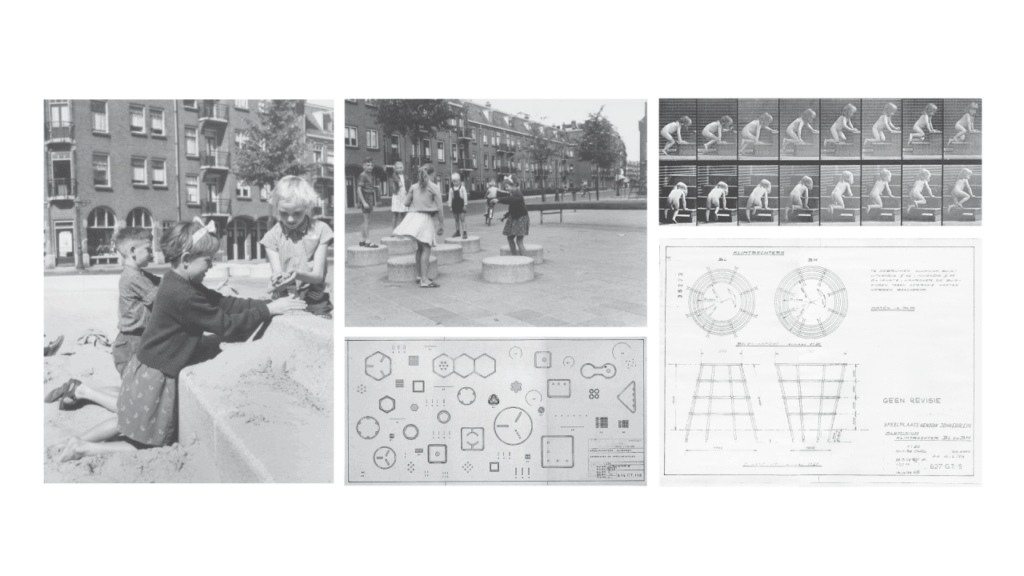
The idea itself is not new. In the 1960s and 1970s, designers and architects incorporated play into their designs in the form of intentional play spaces. Aldo Van Eyck built dozens of imaginative playgrounds in Amsterdam that challenged sculpture and recreation. Instead of a basic playground (such as a plastic slide or similar jungle gym), he created abstract climbing rings, dome forms, and other unique structures that encouraged users to imagine rather than play.
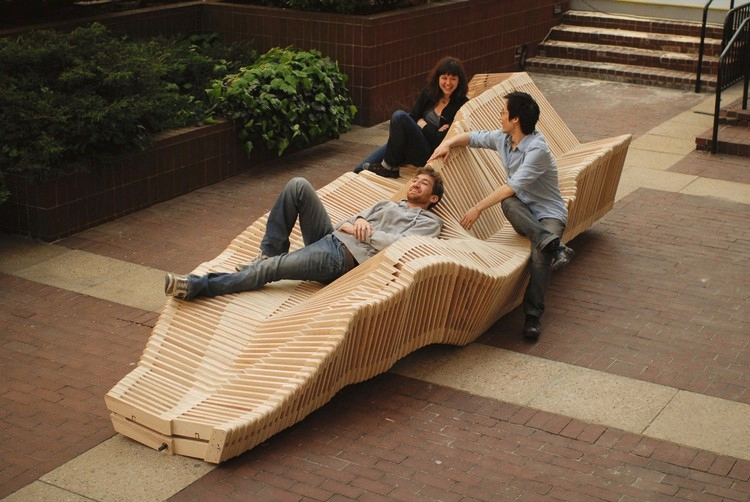
Today, play is being reconsidered with a broader variety of designers creating meaningful spaces. Playful design examples in cities today include an abundance of rooftop play spaces, sidewalks of recreation, plazas, and public spaces with playful elements that cater to both kids and adults within a city context and environment, characterized by their unpredictability and interactivity.
Not Just Playgrounds
What distinguishes this architectural playground style construction from typical play spaces is the desire and ability to do more. They are not just swings and slides; they are about public life. A large climbing structure in a park can be seen, if constructed correctly, as public art. A playful stair can inspire a community fulcrum and convergence. Skateparks are intricately designed as multi-purpose plazas that invite users to engage and experience the space.
An example of how the project can become a thing of significance is found in Superkilen Park in Copenhagen. It is found in the whimsy, yet fast-paced, urban environment with play areas, bike paths, and a curated selection of urban furniture with objects from around the world ( eg, Moroccan fountains, Tokyo Neon signs, Soviet art). The project fosters curiosity while creating opportunities to play.
Why It Matters for Youth
For youth, architectural playgrounds are more than just enjoyment; they are an element of freedom in cities that have been fashioned for vehicles, offices, transience, and commerce. They hopefully remind us all that our daily life experience (and existence) should not be determined based on how our city is built, but based on how we can experience our cities. The seriousness of the point is this: Architecture does not need to be serious or corporate. Architecture can be colorful, abstract, weird, fun, and playful.
Architectural playgrounds are not simply for children; they act as counter media to screen-mediated experience. Architectural playgrounds offer a physical experience based on construction that respects our need to move, create, and engage in directed, face-to-face interaction with one another. They are typically at least free (or low-cost) and available to everyone.
The Future of Playful Cities
As urban centers grow denser and faster, the demand for playful spaces is only going to become louder. Architects and planners are examining how to integrate play in almost every aspect of the city — climbing walls on facades of buildings, musical swings at bus stops, or how playful design/art installations can be conceived and designed with light and movement to not simply engage the viewer, but create a layered experience of interaction.
The revolutionary idea is simply this: play is not only for children and play is not merely for playgrounds; play can (and should) be integrated into the city itself!