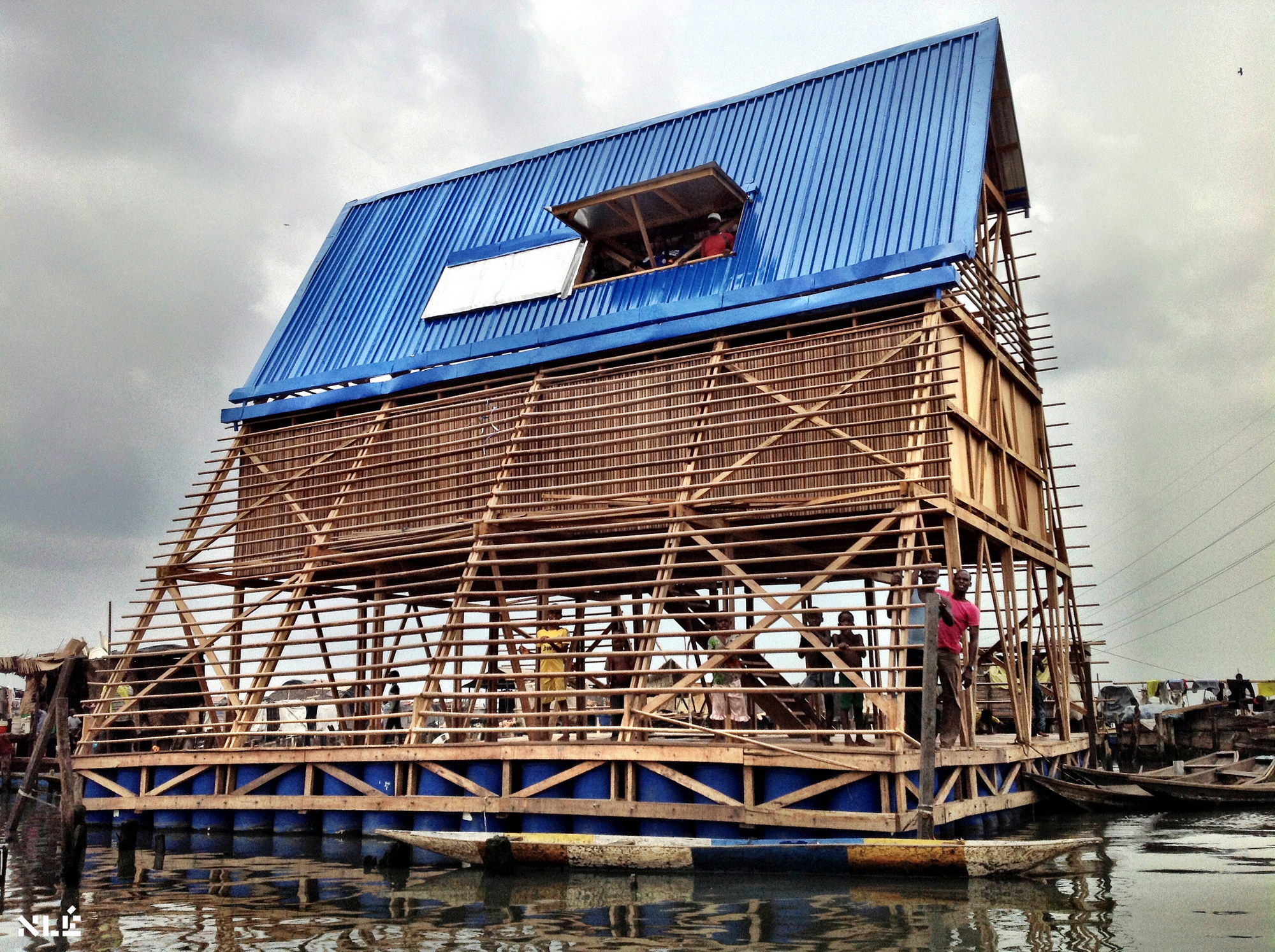

As coastlines shrink and flooding becomes more frequent, architects are grappling with one of the most pressing questions of our time: how do we design educational spaces when the ground beneath us is unstable? One radical solution is starting to emerge around the world–floating schools, classrooms built to float with the water.

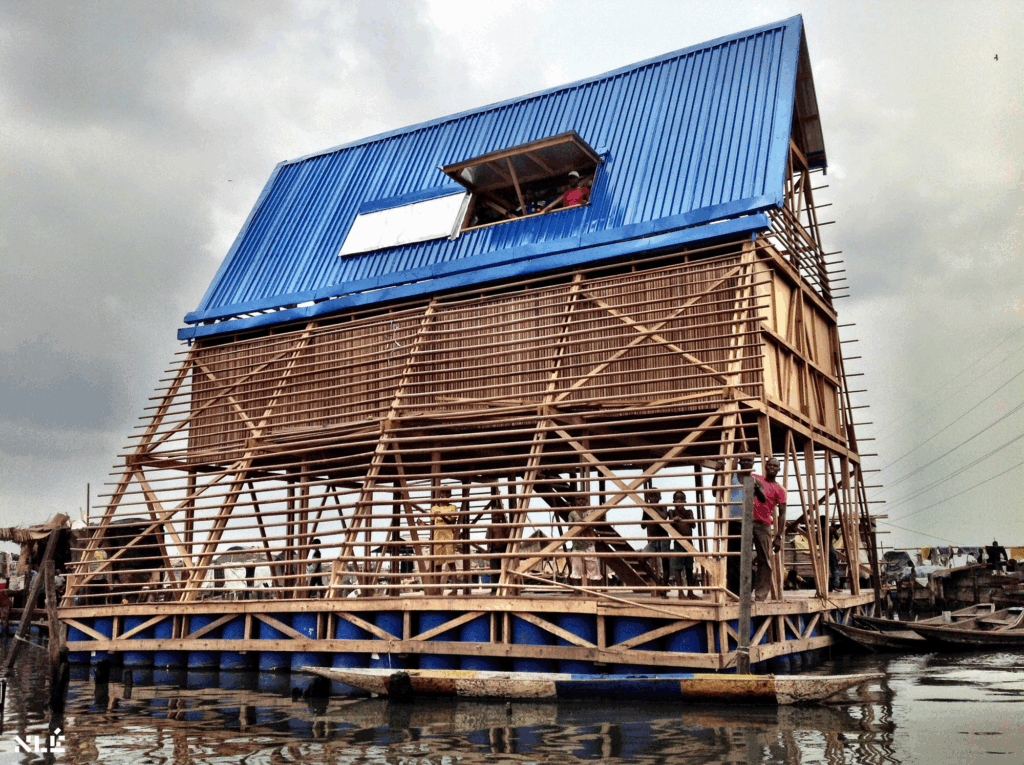
It may seem like a futuristic idea, but it is actually based on practical realities. In 2013, the Makoko Floating School was commissioned in Lagos, Nigeria. When it opened, it quickly became a global icon of climate-resilient design. Designed by architect Kunlé Adeyemi, the A-frame structure sat atop a foundation of recycled plastic barrels, allowing it to float on the water (like a buoy). Although the prototype collapsed after being exposed to heavy rains for three years, it catalyzed the creation. More than a structure, it offered a proof of concept: education could be redesigned to address the challenges of a changing planet.
In Bangladesh, where monsoon flooding often isolates rural communities, floating schools have taken this further. Non-profits, such as Shidhulai Swanirvar Sangstha, have converted boats into fully functioning classrooms, libraries, and training facilities. Powered by solar panels and built to move village to village, these floating schools do not merely survive in flooded environments–they thrive. Children are still able to use this resource, and they continue to engage with their education when their homes and fields are literally underwater. The idea is equally gathering traction in Europe. In the Netherlands, architects are currently envisioning the concept of amphibious schools–structures built on land for the majority of the year, but float on the water for part of the year when tide levels rise. These designs combine engineering, sustainability, and education into one, providing examples for cities affected by flooding when the time is appropriate.
In the case of students, the implications of floating schools are notable. They promise resilience, creativity, and equity. If we perceive a floating classroom as more than a building, it’s a victory that we are taking steps to ensure education continues in the event of a climate disaster. It’s a student-centered proposal for a future where communities won’t have to lose their homes or have nowhere to attend school. Design offered a third option: we can change life itself to match patterns of nature.
However, the issues with which design practitioners need to grapple are vast. Building floating structures that are resilient will require a lot of money, and the government will need to change regulations that were written for fixed buildings without the longevity of floating buildings in mind. Maintenance, safety, and funding moving forward get complicated. The urgency of the climate crisis pushes architects and policymakers to think differently, but it is disconcerting to think that flooding could become an annual occurrence. Schools are created for the benefit of the community, so we cannot leave the schools behind in the climate scenarios.
Floating schools are designed markers to navigate an unknown reality, but they might also take us back to another important truth of design. It seems simple: the end of design is not accommodation, but empowerment – not in absolute and abstract terms, but to think of water as potential instead of risk. We must remember what it means for an idea to be beautiful, historic, and ultimately humanly resilient. The generation that follows may begin to learn how to do math, art, and science in floating classrooms that float with the supply, instead of in a brick building. If that does happen, we may provide education on the transitional aspects, but we must also provide education on the uncertain fate. In such a case, survival and creativity will need to coexist.