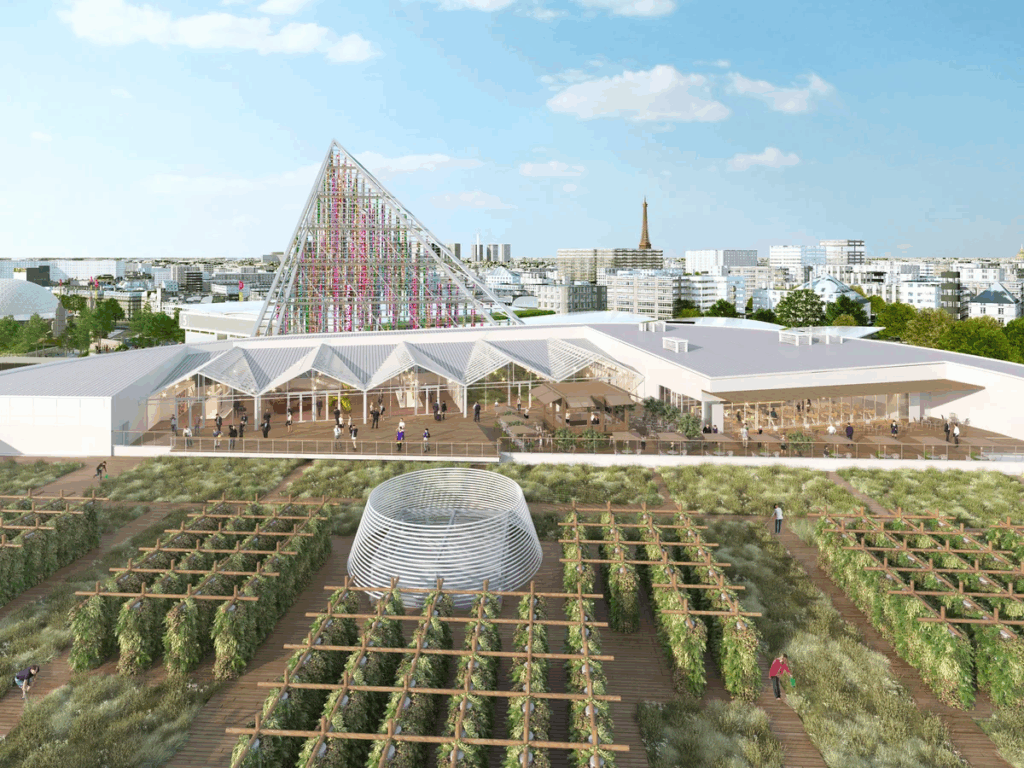
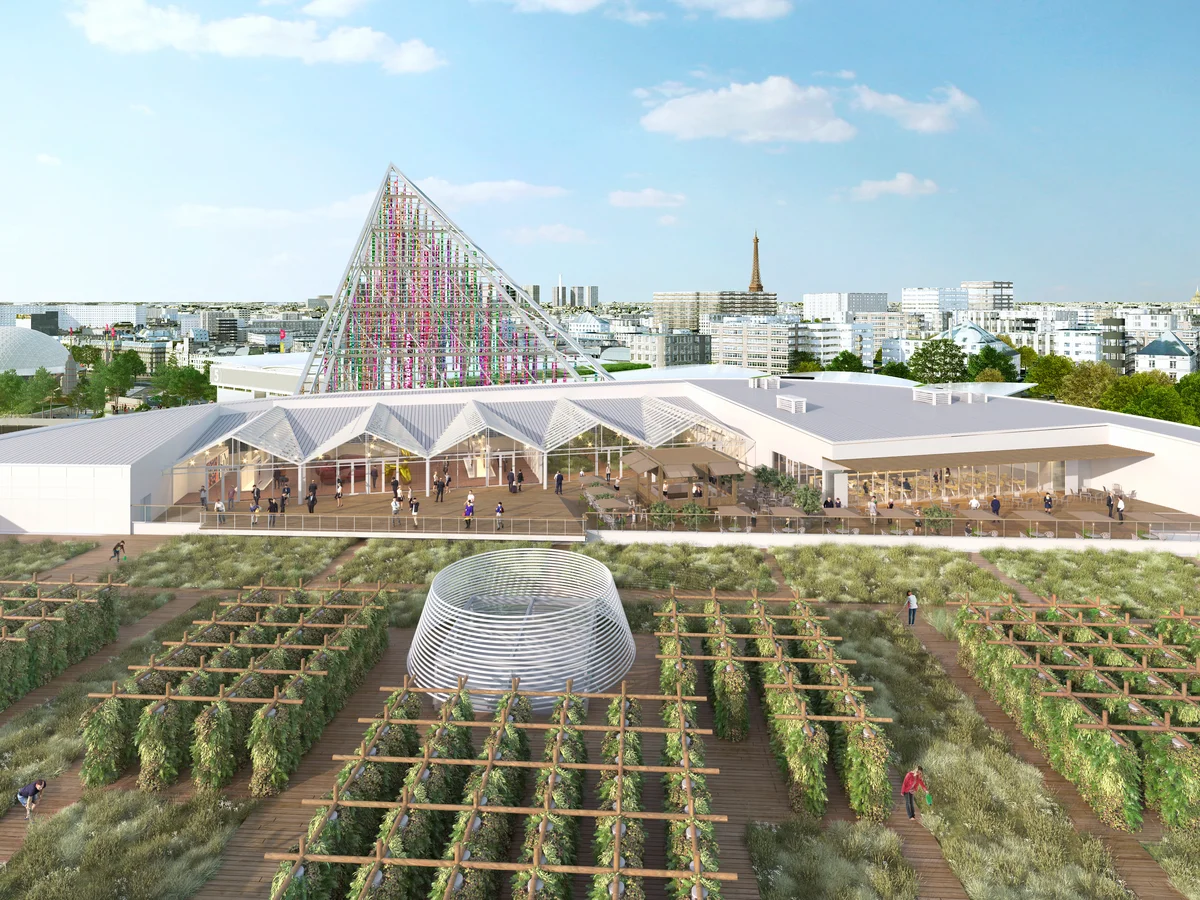

On the periphery of Paris, a new type of farm is changing the way cities think about food. Above the Paris Expo Porte de Versailles, one of Europe’s largest exhibition centers, is a 150,000-square-foot rooftop farm. The largest urban rooftop farm in the world. It is not only an architectural marvel but also a part of a vision for integrating food into the everyday experience of dense cities.
The farm is managed by Agripolis, which grows over thirty varieties of vegetables, fruits, and aromatic herbs. The use of aeroponic systems means these crops don’t even require soil and use 90% less water than other forms of farming. Crops are cultivated vertically in lightweight towers that take up far less area. This system eliminates the need for pesticides and provides maximum yield in a small space. Each day, the farm harvests fresh produce, which is delivered to restaurants, cafés, and residents in close proximity who have paid for a subscription, thereby eliminating transportation and reducing the carbon footprint associated with that part of each meal.
The project is more than just efficiency, however. A part of the garden is shared by local Parisians who can rent small plots of land to grow their own vegetables. The shared plots turn a part of the roof into a community space, promoting people’s ownership of food and reconnecting them socially. The farm hosts school visits and educational programs, integrating it into the fabric of city life and providing children with a firsthand experience in sustainable practices.
From an architectural perspective, the rooftop farm is a project in adaptive reuse. It is taking an underused urban surface and transforming it into a productive landscape, rather than occupying more land to produce food in green spaces. In cities like Paris, where land is already scarce, it tells a story of how architecture can make tangible contributions to ecological resilience in the face of a climate crisis. The design has the potential to challenge underlying assumptions about what allows a rooftop to exist—roofs can be more than mechanical zones or dead space, they can serve as productive, living areas that feed the lives below them.
The Paris rooftop farm is not just a local oddity; it is part of a movement to fold food systems into urban design. It creates a new recipe of mixing architecture, sustainability, and agriculture to create an institutionalized resource for cities that aspire to be greener, healthier, and less reliant on other, more pernicious systems. If Paris can create a productive farm from a convention center roof, we can only wonder what warehouses, schools, office towers, etc., can contribute to nourishing cities.