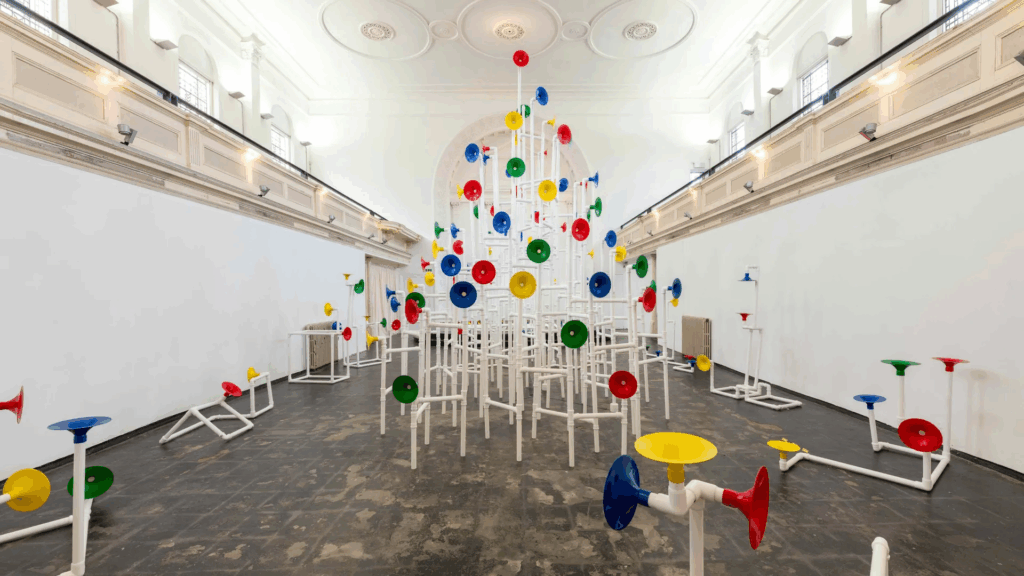

In 2025, Camden Arts Projects in London opened Utooto, a surprising and moving new type of pavilion. Not made of bricks or steel, the pavilion is not configured principally around those common shapes. Still, it operates as a conceptual being that is made out of sound, engagement, and collective imagination. Utooto was conceived by a celebrated sound designer, Yuri Suzuki, and that is much appreciated because Utooto repurposes a former Methodist church into a responsive “sonic architecture” space in which participants co-create the experience simply through motion and sound.
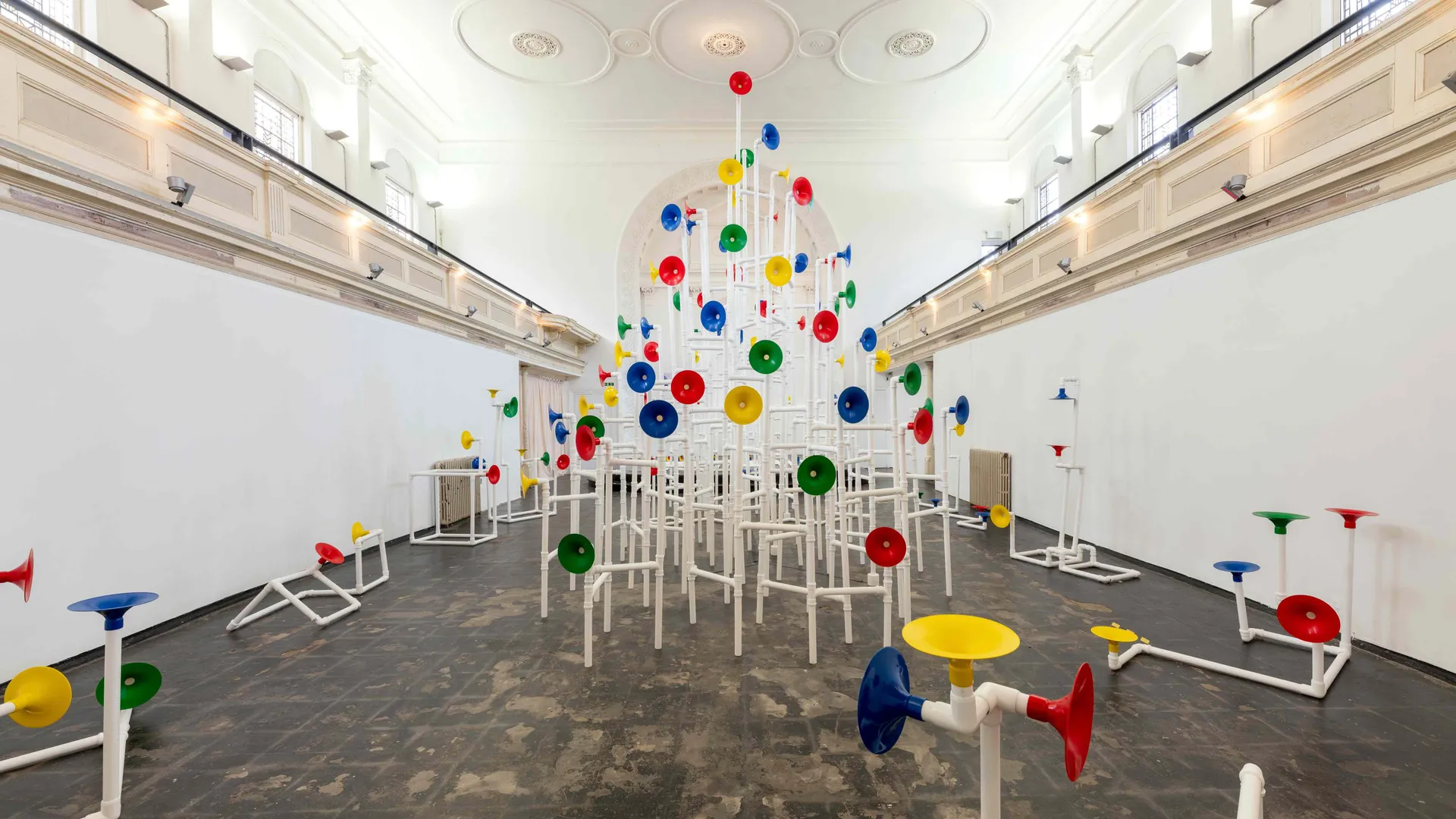
To enter Utooto is akin to having entered a floating, acoustic dream. The installation is composed of curved white plastic pipes that terminate at colorful funnels that amplify, bend, and reflect sound. Within this evolving structure, participants’ encounters are shaped through their sound. Hidden speakers blur out a generative soundtrack–comprised of the simplest vowel and consonant combinations used in other languages–providing a familiar backdrop, but creating also something that is both universal and very personal. The fact that the pavilion’s name borrows from an Okinawa phrase for sacred utterance suggests a certain ritualistic quality to the experience of engaging with sound and space in common.
What Utooto offers is unique in the way it rethinks architecture. Architecture is not a fixed form, but is an extended, wound-up living soundscape which is shaped by human bodies. Utooto allows for thinking about space, interaction, and play; it will enable consideration of how to change a shell into a collaborative acoustic playground. Especially when the world is designed to mute our surroundings and what’s around us, Utooto is a tiny unenclosed marker that architecture can also be heard, felt, and collectively authored at the Co-design level, and that the participants can focus on presence and engagement. You can also view it as a new practice that offers architecture as a form of empathy that extends beyond materiality and angles.
Utooto is relevant now because it blurs the lines between the museum, the concert hall, and depictions of temples. Meaningfully, it offers a multisensory poetic model of human-centered design: where space responds, co-creates, and resonates in synchronicity of being human. It is a whisper of possibilities, a future where architecture is not only represented and built, but resonated, shared, and experienced in first-person human magnitude, in its more human forms.