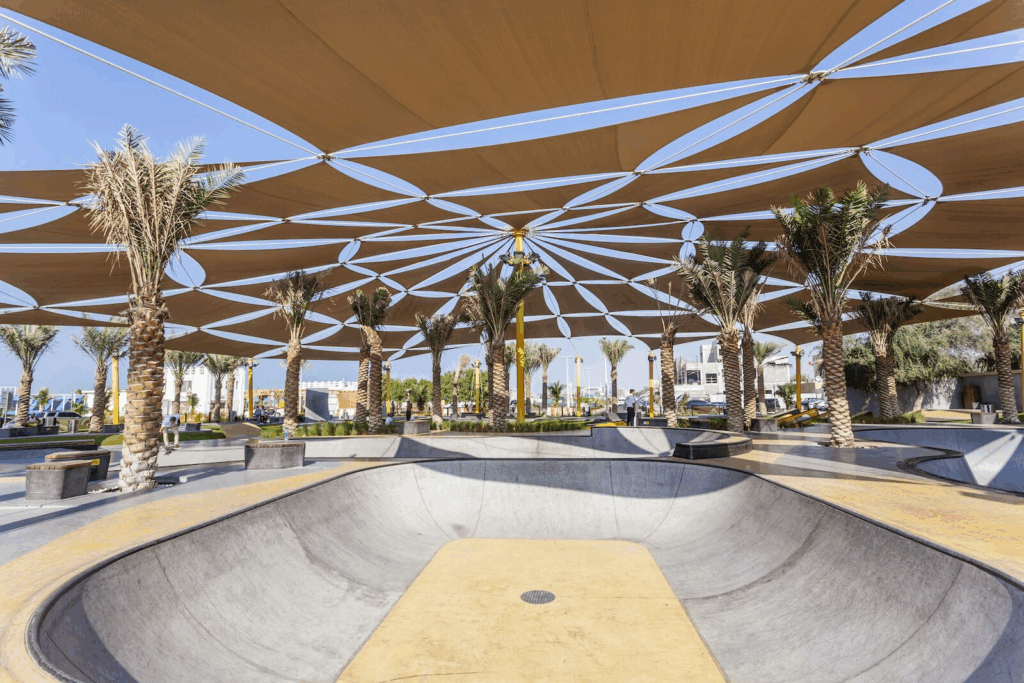
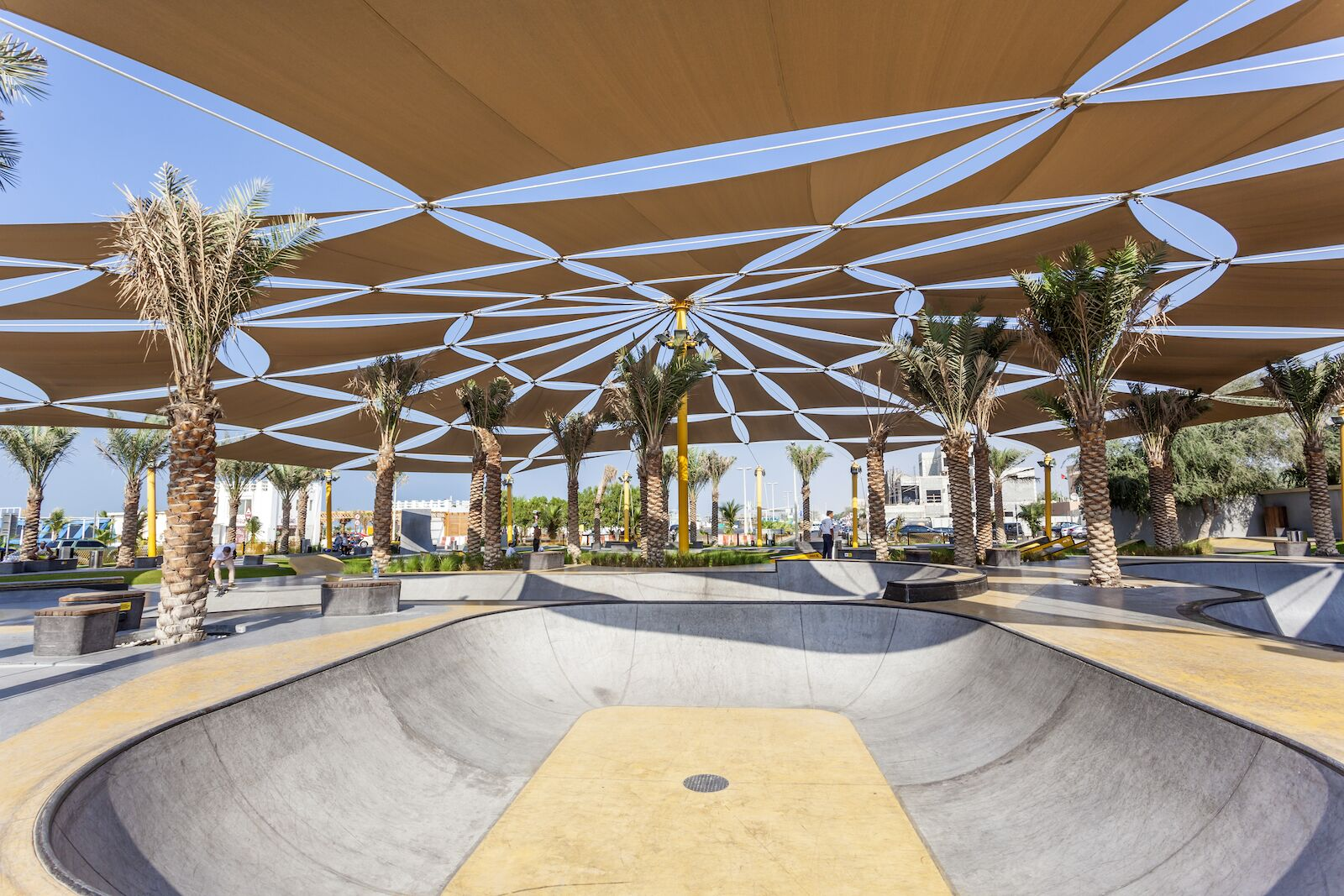

Skateparks are commonly regarded simply as recreational facilities. However, planners and architects are beginning to see them not only as recreational spaces but as urban design laboratories. These recreational spaces are typically found bordering cities, under bridges, or in vacated areas. Skateparks activate underutilized parcels of land to become cultural spaces where design, movement, and community come together.
What comprises skateparks are user-driven places. Traditional parks and public plazas have a top-down process in their design. Conversely, skateparks develop through a co-creative process between designers and users (skaters). From every wall ride to every rail to every bowl, skaters use their creativity to react to the environment every day. With every performance, skaters utilize our infrastructure and activate their respective cities, authenticating their identities.
Cities ranging from Copenhagen to Portland have embraced skateparks as an engine of regeneration. For instance, architects in Malmö, Sweden, co-created Stapelbäddsparken with skaters, ultimately transforming an abandoned industrial site into a skatepark and public space that is now recognized as one of the premier skateparks in Europe and a model of participatory design. In the United States, skateparks have even taken a different path from their planned cousins. DIY skateparks, such as the legendary FDR Park in Philadelphia, provide evidence of how grassroots informal design projects can evolve ignored public infrastructure into vital, vibrant, and self-sustaining (life-stage) places full of authenticity.
For young people, skateparks represent freedom and identity. They are also not just places for skateboarding or surfing. Skateparks are social, cultural, and spaces of resilience. When cities acknowledge and incorporate legitimate cultural practices, including versions of skate culture, we highlight play, risk, and creativity in our urban fabric.
In the future, skateparks will illustrate a larger lesson in architecture. When design responds to user experience/placemaking with users, especially youth, we create more authentic and lively public spaces. What might start as a half-pipe or a ledge might end up shaping the lens through which we understand ideas relating to a new urban vernacular of inclusiveness, adaptability, and play in the public realm.