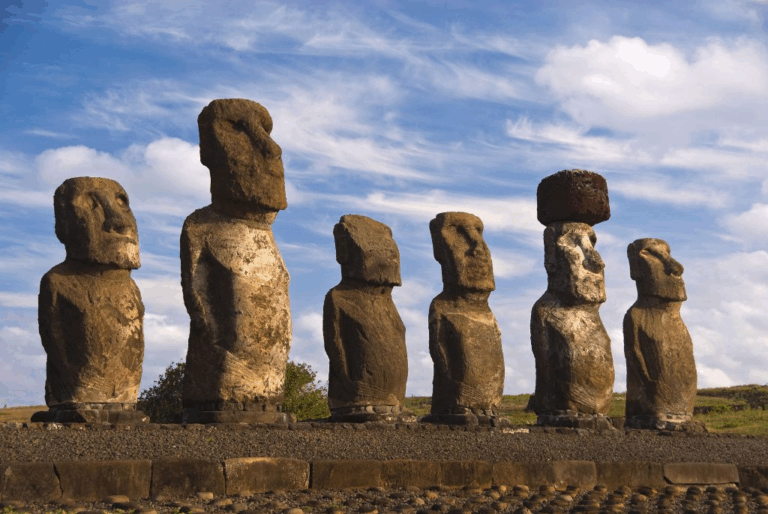

For centuries, the puzzle of how the Moai statues of Rapa Nui—some weighing more than 80 tons—were transported across the island has confounded archaeologists, engineers, and myth-makers alike. The image of these mighty figures dotting the volcanic terrain poses an almost impossible question: how did a community of islanders, isolated from their fellow men in the Pacific, shift such huge forms without wheels, without metal tools, without animals of higher rank? It points to an answer, however, in the islanders’ deep knowledge of balance, rhythm, and geography.
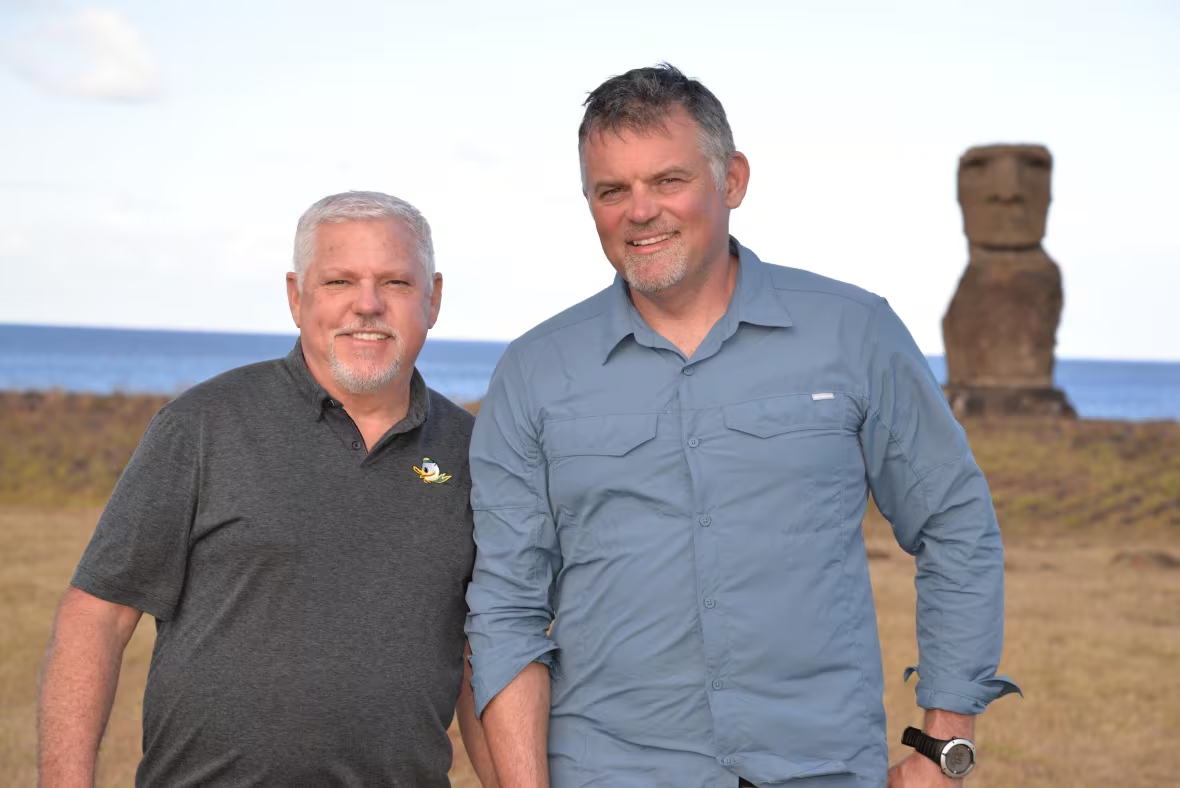
In the 1980s, the anthropologist Terry Hunt and the archaeologist Carl Lipo put forward a radical idea: the statues did not move—they walked. Their theory, based on experiment and oral tradition, argues that parties of men at either side of a standing statue rocked it forward with ropes, step by step, like a refrigerator wobbling across a floor. In 2012, Messrs. Hunt and Lipo invented the process using a five-ton replica, thereby proving it feasible. The whole thing depended not on brute force but on coordination—dozens of men pulling together as one man, who were led in their motions by chants which presumably kept up the rhythm of the individual steps.
This theory upsets the age-long story that the population of Rapa Nui perished through “Ecocide,” consequent of over-exploitation of resources in moving the Moai. In its place, it offers a picture of ingenuity and ecological intelligence—a society able to live with its landscape rather than die in it. The volcanic soil, the slopes of Rano Raraku quarry, and the soft paths scored into the ground by generations of movement were all part of a carefully digested pattern.
But more astonishing still is the effect that this would have on architecture itself. The Moas are no longer merely static monuments, but performative architecture, moved to life by movement and ritual. The transport process is therefore as sacred as the final installation. It turns engineering into a ceremonial process.
And so too, today, as architectural designers meet to discover sustainable methods of work derived from indigenous facts, Rapa Nui offers a word of quiet advice. Progress does not necessarily mean discoveries in material and new technologies, but rather the rediscovery of old truths regarding community, material, and transport.
Sources
- Hunt, Terry L., and Carl P. Lipo. The Statues That Walked: Unraveling the Mystery of Easter Island. Free Press, 2011.
- National Geographic. “How the Moai ‘Walked’.” 2012.
- Smithsonian Magazine. “How Easter Island’s Colossal Statues Walked.” 2013.
- Jo Anne Van Tilburg. Easter Island: Archaeology, Ecology and Culture. Smithsonian Institution Press, 1994.