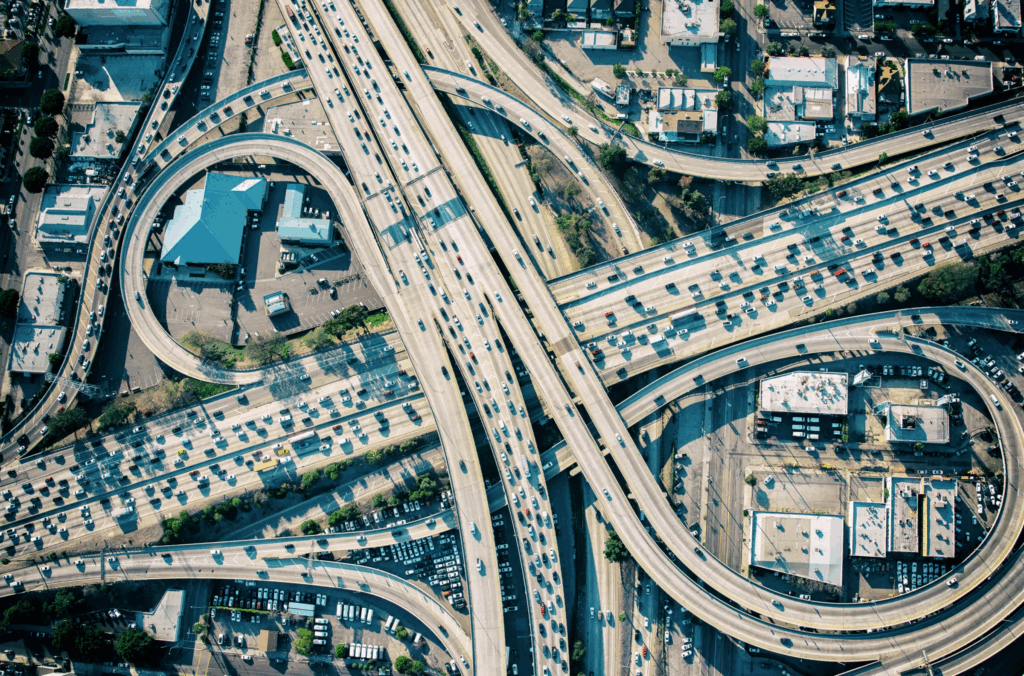
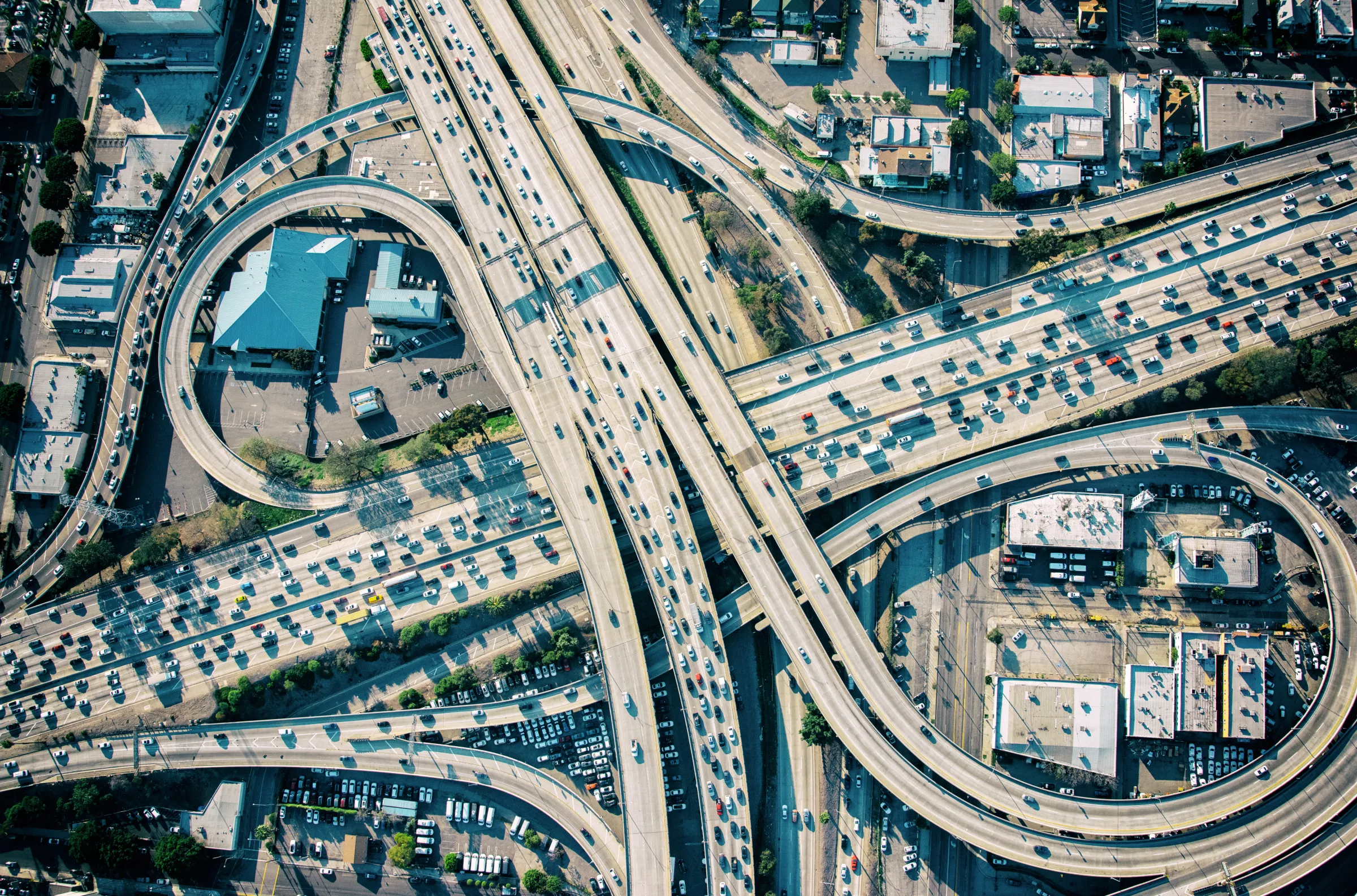

When New York City constructed its network of expressways in the 1950s and 1960s, it was more than paving roads—it was reshaping lives. Major highways diverted predominantly through Black, Latino, and working-class populations displaced tens of thousands of people, leaving scars that continue to shape the city’s social and environmental fabric today.
Cross Bronx Expressway: A Highway Through Communities
The Cross Bronx Expressway, planned and built between 1948 and 1972 under the direction of urban planner Robert Moses, remains one of the clearest examples of destructive infrastructure. The project sliced through densely settled neighborhoods, including Tremont, Morris Heights, and East Tremont—neighborhoods populated with working-class Jewish, Italian, Puerto Rican, and Black families.
An estimated 40,000 people were displaced and pushed from their homes. Robert Caro’s The Power Broker describes Moses refusing alternate routes that were deemed less harmful – alternatives whose impacts revealed more about relating power to not liking options than engineering rationality.
Once, vibrant, joined communities were severed by a trench of concrete, noise, and emissions. Property values dropped, small businesses folded, and collective cohesiveness was shattered.
Environmental and Health Impacts
The health and environmental legacy of the expressway persists in the places along the Cross Bronx. NYC Department of Health and Columbia University studies show that people who live near the expressway experience among the highest levels of asthma in the U.S., particularly children. Emissions from vehicles, noise pollution, and a lack of green buffers or protection from surrounding areas have been decades in the making, eventually leading to chronic respiratory and cardiovascular disease.
The Sheridan Expressway: A Short, But Symbolic Cut
The Sheridan Expressway, built in 1963, was also a Robert Moses project extending into the Bronx. Although the expressway was only a little over a mile long, it cut off surrounding residents—who were often Black and Latinx—from the Bronx River waterfront. Plans to further extend the expressway were cancelled after protests in 1971, making this one of the few instances where the city’s opportunistic planning was halted.
Recently, parts of the Sheridan have been redesigned to re-engage neighborhoods with green space and enhance pedestrian safety, which is a small step in the right direction, but is crucial nonetheless, given the destructive habits of previous decades.
The Legacy of Segregated Infrastructure
The placement of these highways was intentional—and served a larger purpose. During the mid-20th century in America, state and local planning decisions purposefully selected communities of minority and low-income individuals as sites of clearance, whether through “urban renewal” or highway multitudes. This reasoning is blunt yet practical: these communities had the least political power and, therefore, were the least likely to resist.
In the case of New York, the infrastructure for mobility that sought to connect the shots of the city, reinforced segregation patterns, amplified pollution, and concentrated wealth degradation into communities of color.
Reimagining the Cross Bronx
In 2022, the City of New York initiated the Reimagine the Cross Bronx Expressway study with the support of the federal government. The study focuses on decking portions of the expressway, expanding green spaces, and ultimately improving air quality in surrounding neighborhoods. This is a growing acknowledgement that infrastructure should heal, not divide.
Why This History is Important
Much of the time, the Cross Bronx and other highways are simply paths of travel to places of work, subsequently lost. To others, they serve as reminders of what has been lost. Unpacking this history raises more critical questions about how we make, who benefits, and who is harmed.
Many in the next generation of architects, planners, and designers in the public sector have the chance—and the duty—to ensure that the ills of history are not perpetuated under a new guise.
Sources
- Caro, Robert A. The Power Broker: Robert Moses and the Fall of New York. Vintage, 1974.
- New York City Department of Health and Mental Hygiene. “Asthma Facts, 2023.”
- Columbia University Mailman School of Public Health. “Plan to Transform Cross Bronx Expressway Gains Momentum,” 2024.
- City of New York, Office of the Mayor. “Reimagine the Cross Bronx Expressway: RAISE Grant Announcement,” 2022.
- Congress for the New Urbanism. “Sheridan Expressway: Reconnecting the Bronx,” 2023.
- Crain’s New York Business. “Racism and Infrastructure Are Embedded in New York City’s Highways,” 2022.