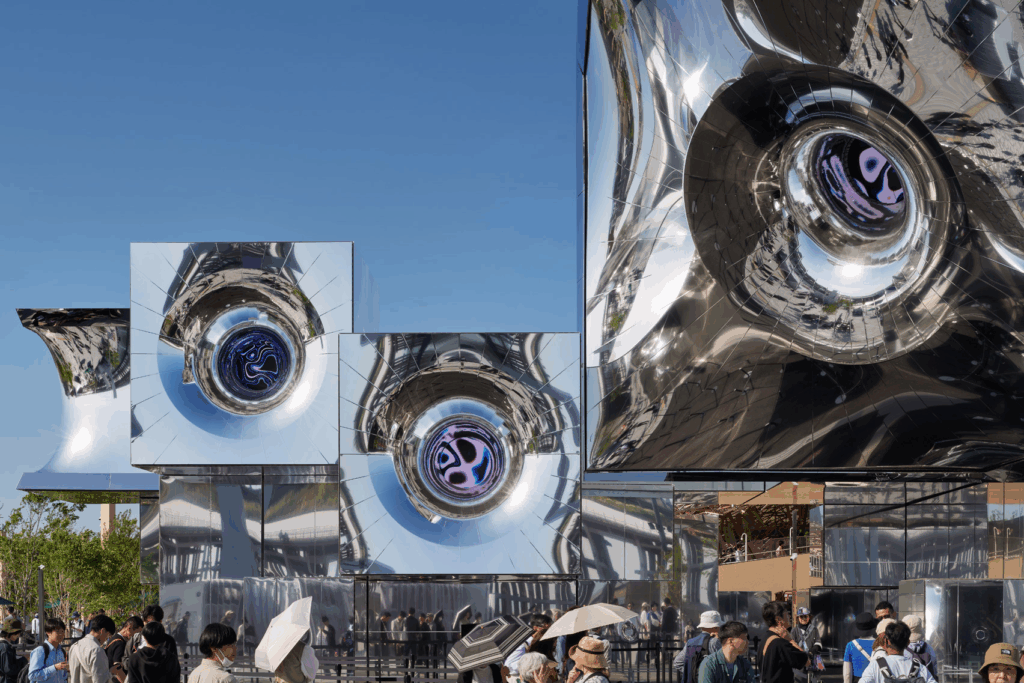
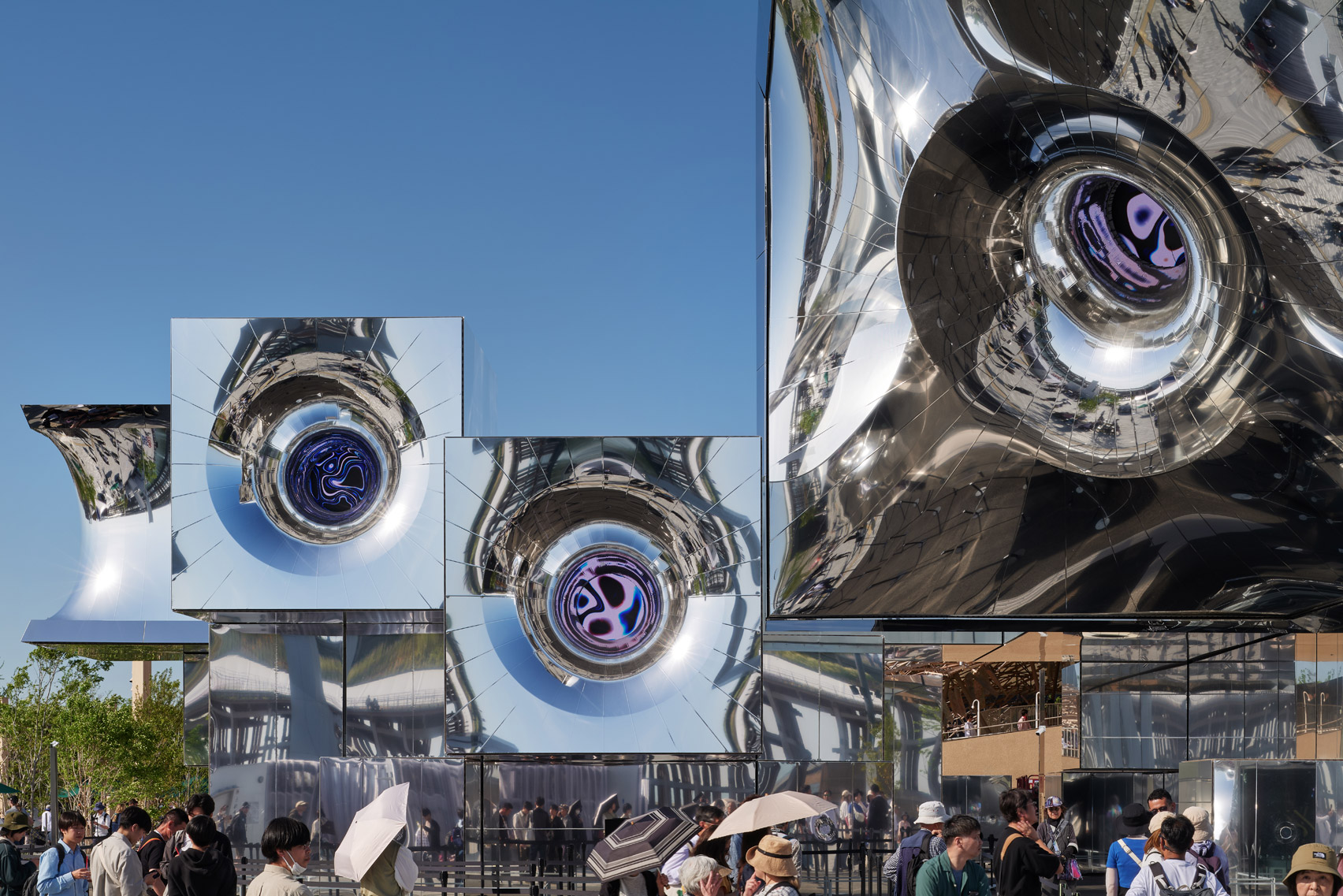

During the Osaka-Kansai Expo 2025, one pavilion will capture all the attention—not for its mass or size, but for its shimmering, dynamic performance. null² (pronounced “Nurunuru”) is a pavilion designed by media artist Yoichi Ochiai, and executed in collaboration with NOIZ architects, Arup, and robotics company Asratec, which is a rethinking of architecture. Rather than referring to a solid building, it is an alive environment that expands the limits of both the building and the living surface.
The pavilion is made in part of voxel-based cubes that are sheathed in a new mirrored membrane; thus, the edges of its form appear solid and the surface seems fluid. The reflective surfaces shimmer and warp—not just through trickery of light, but through deformation. The membrane interacts with robotics and hidden sonic vibrations to alter the façades as they ripple and undulate in response to the city’s real-time conditions. In doing this, it takes the experience of architecture beyond the passive to the performative. The interior walls’ mirrors become a surface for visitors to see themselves and the landscape interactively as it morphs in poetic distortions.
Meaningful both in the concept as well as manifestation, null² embraces the idea of Digital Nature: a merging of digital responsiveness and natural phenomena that is altogether new and meaningful. It is a machine; an opening to a future with buildings that are not solid, but living; it engages real-time interaction; it reacts; it adapts; it has emotional qualities and expression. As the disciplinary field engages in sustainable building, artificial intelligence, and immersive experience, null² presents a crystallization of entirely new building typologies—the kinds of buildings that are no longer places for shelter, but are, and can be, interactive participants in the daily lives of a city.