
In a couple of years, the city streets may be a sign of new life, with the adjacent buildings shading imperceptibly at sunrise, high noon, and sunset. It is not science fiction. It is one of the latest emerging technologies in the field of thermochromy, the property of substances to change color with temperature.
It is in the form of thermochromic pigments that the effect is at present used in the manufacture of such things as mood rings or cups from which coffee is drunk. Indeed, in architecture, it is coming to mean something altogether new, as architects increasingly seek passive methods to eliminate heat gains and improve the efficiency of heating systems, to which thermochromic pigments can no doubt contribute.
Fancy a façade which may reflect the sun’s rays in the time of a warm spell, and at the time of chilly weather, radiate warmth, but have no recourse to current or mechanical means, but resort simply to chemistry!
Living Faces and Dynamic Skins
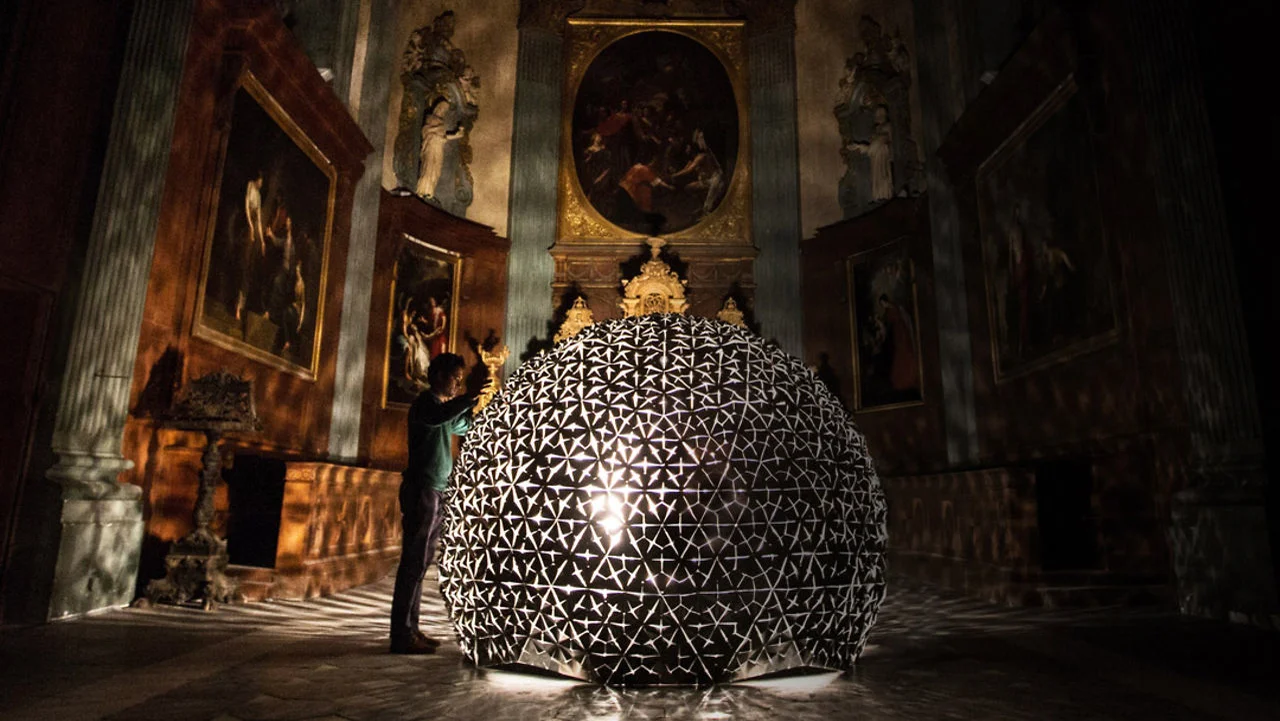
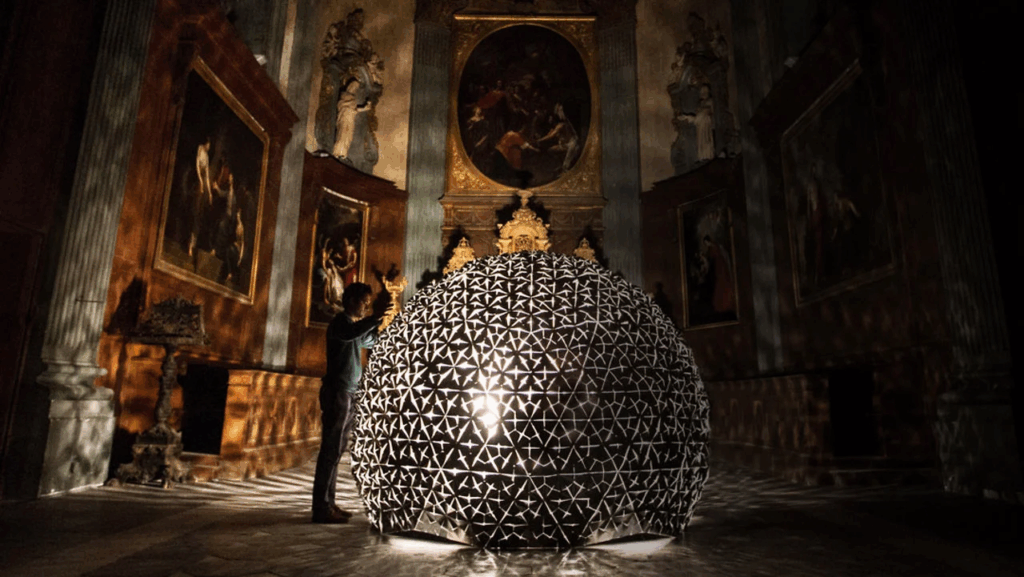
One of the earliest large-scale experimental designs is that of the Dutch designer Daan Roosegaarde, whose “Lotus Dome” used intelligent materials that opened and closed in response to heat emitted by the human body. Presently, design scientists are busy developing thermochromic pigments that respond not to the heat of the human body but to urban microclimates. In the Advanced Material Lab at the University of Nottingham, scientists and researchers under the guidance of Dr. Jie Ji have developed a light-colored roof paint that darkens when the surface temperature exceeds 30 degrees, becoming increasingly light in hue. In a 2021 paper on the subject, it was found that buildings with such pigmentation were 5 to 7 degrees cooler. C in the summer is cooler than similar buildings to which ordinary paints have been applied. The utility of such a pigment is invoked for the covering of roofs in the architecture of dense populations, for the purpose of removing the necessity for ordinary electric air conditioning in the summer. At MIT’s Self-Assembly Lab, visionary façades have been formed that brazenly knit together thermochromic films and knick-knack kinetic panels into 3D constructions that respond to heat and moisture. The results are buildings which explore environmental changes formally in the immediacy of time or space, being part sensory organs for climate change and part works of art.
A New Urban Semiology
The conclusion, however, is not merely the eco-friendliness of thermochromic architecture, but again the way in which it transforms the city’s visual text. Instead of stolid walls, we have surfaces that breathe and change. On a hot afternoon, a building may change from deep charcoal to pale silver, reflecting more light down into the street. At night, it cools and becomes dark again, being the sign thereof.
Moreover, in cities where urban islands become hot in summer, as in Phoenix, Dubai, and Seoul, this system will offer both efficiency and poetry. It is evidence that the city environment is never invariable, and at the same time it enjoins on the citizens to see the area’s temperature not as invisible statistics but as visible phenomena aesthetically responsive.
This Science of Shadow
The thermochromic tunings depend mainly on leuco-dyes or liquid crystal systems, which respond to heat by changing their molecular positions. Leuco-dyes are cheap and vivid, so they lend themselves well to coats and plaster castings, while liquid crystals are suitable for delicate tones and shades. The main limitation lies in durability: with rust and atmospheric wear and tear, the pigment spoils, unless, of course, the aircraft’s movement is sluggish.
In response to this defect, materialists at the Fraunhofer Institute for Building Physics have developed glass-valved tunings and even thermochromic microcapsules, which can withstand up to 10,000 heat cycles before losing their colour. This means that the tunings are likely to shift very soon into the general elements of installation art rather than the gallery habitus.
Designing for Climate Apparency
The tendency of the climate, moreover, to materialize the heat —the melting of the streets, the cracked pavements, the overheated flats, etc. —these materials burglarize the possibility of expressing architectural forms in and by this intuition of the climate. The thermochromic surfaces, being the skin of the city, express them in colours, not chaste figures and convertible forms or perfection.
This is not merely a change of ability, but of culture. Buildings whose colour changes in response to heat, whose skins blush, curse, mulatoise, teach us that architecture is not a dead thing, but a live, responsive, timing thing, alive, syncing itself with the rhythms of the planet.
The thermochromic city is not merely reflected in the light. It is reflected in time.
Sources:
- Ji, Jie et al. Thermochromic Coatings for Passive Cooling in Urban Buildings, University of Nottingham, 2021.
- Roosegaarde, Daan. Lotus Dome Project Documentation, Studio Roosegaarde, 2012.
- Tibbits, Skylar. Self-Assembly Lab Research Archive, MIT Architecture, 2022.
- Fraunhofer Institute for Building Physics. Durability of Thermochromic Microcapsules for Architectural Coatings, 2023.