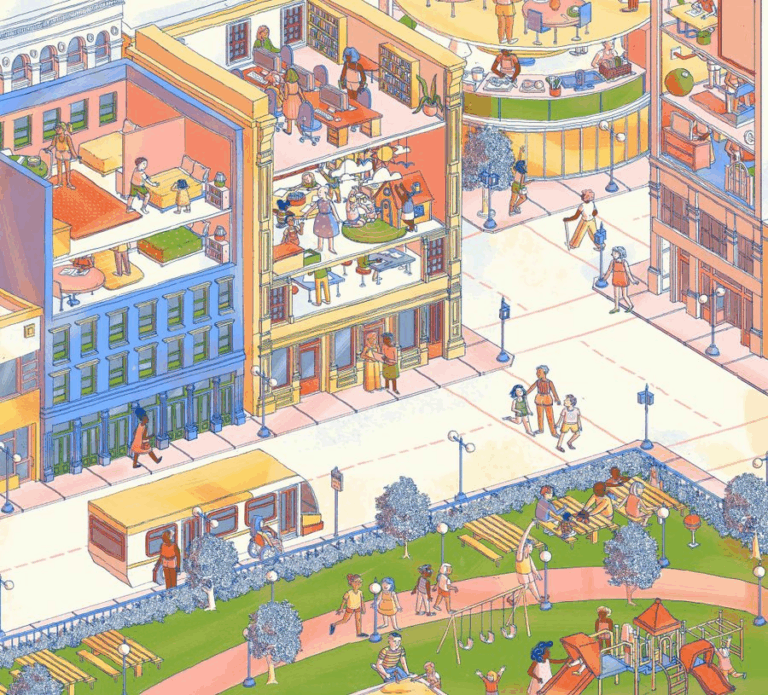


Architecture is more than the act of constructing buildings; it is about changing the world in which we live, creating spaces with narratives that evoke emotions and instill a sense of belonging. But it’s not without its drama, just like a good story—everything from losing arguments on the preservation of historical landmarks in favor of development to conversations haunted by the ethics of gentrification to wins and lessons learned from buildings that have been deemed failures. All of these conversations incite passion and force us to question the world we are creating and who decides what stays and what goes.
Let’s take a moment here to unpack some of the largest and most conversation-inducing debates in architecture today: preservation versus modern development, the ethics of urban gentrification, and what we have learned from famous failed buildings. Whether you’re an architecture enthusiast and these conversations excite you, or you’re simply someone intrigued by how the built environment influences the shaping of society, these conversations are valuable and difficult to ignore.
Preservation vs. Modern Development: A Battle for the Future
One of the most passionate debates in the world of architecture is whether to preserve an old building or embrace new development and let it stand. The cities in the world have fascinating stories to tell through the buildings or structures that show their identities or their backgrounds, and cultural significance, but as the world progresses forward, development often coincides with population growth, the advance of technology and increase in necessity; which is when the world of preservation and new development collide.
The Case for Preservation: Hold On to the Past!
There is an allure to historic buildings – one minute you are gazing at the urban landscape, and the next, you are transported to a different era. Whether it’s the Colosseum in Rome, the Eiffel Tower in Paris, or the Taj Mahal in India, these buildings are far more than just tourist attractions. They are living historical time capsules that bind us to our ancestors, giving us a sense of continuity through time. Preservationists claim that these buildings are significant and worthy of preservation not only for their aesthetic value but also because they constitute an integral part of cultural identity, provide shared memories of past generations, and offer a glimpse into the human experience.
For instance, did you know that the Colosseum in Rome is one of the most recognized landmarks in the world, not only representing the great civilization of Rome but also a UNESCO World Heritage Site? It attracts millions of tourists every year and helps drive the economy in Rome. After all, part of the allure of buildings like the Colosseum is not just its majestic architecture but also the history of the gladiators, battles, and remarkable engineering feats that took place there nearly 2,000 years ago.
Ultimately, the preservation of old buildings enables generations to experience and understand the past in ways that textbooks cannot. Preserving these sites also ensures that traditional skills and crafts, such as stonemasonry, will remain available for future generations. If you have walked through the cathedral at Notre-Dame in Paris or the incredible mosaics at St. Mark’s Basilica in Venice, you may have considered the time and skill required to build them. This traditional construction approach may be less common today, underscoring the significance of the buildings that preserve it.
The Case for Modern Development: Make Room for the Future!
But what happens when we ought to preserve the past but also need to expand? As urban sprawl increases and populations grow, we need more planning, design, and buildings themselves to consider the requirements of a modern city. In some circumstances, existing buildings can be prohibitively expensive to maintain. The World Trade Center in New York is a perfect example of this. Although the Twin Towers were iconic buildings, they were not energy-efficient structures, nor did they meet the security or technological standards of more modern buildings. One World Trade Center was built to replace it—a modern wonder of architecture that stands as a symbol of recovery for the city and nation after the atrocities of September 11, 2001, but is also much more energy-efficient, sustainable, and far safer.
Fun Fact: One World Trade Center boasts a remarkably dense 4-inch-thick steel core and a massive base, providing structural integrity against earthquakes, tornadoes, and terrorist attacks, while also achieving one of the highest green ratings available. This makes it a true symbol of modern development, respecting the need for sustainability.
Cities like Singapore and Dubai exemplify how modern architecture can seamlessly combine form with function. Marina Bay Sands is a stunning resort renowned for its three towers and SkyPark, as well as its jaw-dropping city views. Although preserving the history of cities is vital, there are examples of projects that reimagine how cities can grow and evolve while respecting the underlying environmental, cultural, and community elements. Sometimes, at the speed of urbanization, it means urban upgrading—developing energy-efficient housing, larger housing options, and more high-tech, high-rise office buildings to help keep businesses booming. Cities like Shanghai, China, and New York City continue to find ways to refresh their skylines with bold new skyscrapers, peering into the future while embracing all that is past, present, and future (forever evolving with all three).
The Ethics of Architecture in Urban Gentrification: Who Benefits?
In its simplest form, gentrification refers to the transformation of lower-income neighborhoods into more affluent ones. On the other hand, gentrification can often bring better infrastructure, increased safety, and the relocation of economic opportunities for businesses in the area while leaving long-term residents who are unable to afford it behind. The process of gentrification involves buildings that are renovated or replaced, geared towards new, wealthier residents rather than the people who have helped define the character of their neighborhoods.
Let’s first look at the upside to this gentrification cycle—‘revitalizing an area that may be economically depressed.’ Gentrification has a bad rap, but it can bring about some positive changes, not only to the houses, buildings, and streets but also to the people who live in those neighborhoods. Sometimes, gentrification brings new investments and improved community safety, along with enhanced public services to support the growth in new development areas, such as transportation, education, healthcare, etc. Eventual recognition that traffic call safety education in emerging neighborhoods and gentrifying areas can produce preliminary changes towards prevention and safety for neighborhoods that are developmentally constrained. For example, there is a bridging story from Washington, D.C., featuring a neighborhood called Shaw. Shaw was infamously recognized for its high crime statistics in urban development. Still, in one generation, Shaw has been transformed from a poverty-stricken area to a trendy hub of restaurants, galleries, and new living models and choices.
Notably, an inner-city Brooklyn example is suitably correlated with the strict gentrification demographics of present times. A variety of neighborhoods out of gritty indifference like DUMBO (Down under the Manhattan Bridge Overpass) when I was younger, after gentrification transitioned into one of New York’s most pleasing (and expensive) places to be a part of. Once a grimy industrial wasteland, DUMBO is now also hip, with art galleries, coffee shops, and pleasing views of the Brooklyn Bridge.
Gentrification can also create new employment opportunities for artists, musicians, and small business owners. In neighborhoods that have remained below the radar of opportunity, urban gentrification has astoundingly brought opportunity, doing so now for the first time.
However, with the emergence and growth of gentrifying neighborhoods, the drawback of the opportunity wave is the displacement of lower-income communities and the loss of permanent housing. Rent costs are more expensive, and families who have been lifelong residents leave. The removal and displacement of long-term families is particularly disheartening for neighborhoods rich with historical and cultural meaning—taking away meaning in a neighborhood takes away the many things that made that neighborhood unique to the city.
A notable example in San Francisco is the Mission District. The Mission District was a predominantly Latino neighborhood, once consumed with an affordable and talented resident population. Still, it has transformed with new, higher-income residents, most of whom are non-Latino, pursuing easier quotes, displacing many long-term families, and the rent has skyrocketed. Gentrification also precludes non-gentry businesses and neighborhood tensions high, but it is also a parody of the rise of fancy coffee or high-end boutique stores occupying the commercial space in a community that is essentially internationally bound by trade and commerce of immigrants/retail- celebratory spirit, that former Missions, Lumbenos, and people of the colonial urban Spanish ruins culture accomplished. Gentrification, as illustrated, can be detrimental to the point of cultural erasure—removing our urban neighborhoods and erasing the history, traditions, and vibe of that community to produce a more valued “Lego of what is in”.
The ethical dilemma here lies in how we approach this development. It’s not enough to just build modern spaces that attract wealthier people. Urban architects and city planners must consider creating spaces that enhance the lives of everyone in the community, including those who have been there for generations.
Famous “Failed” Buildings: Learning From Mistakes
Not every building is a success story. Some buildings fail due to counterproductive planning, finances, and sometimes simply being too ahead of their time. However, even “failed” buildings can teach us lessons regarding what works and what doesn’t.
Pruitt-Igoe Housing Complex: The Modernist Utopia That Crumbled
The Pruitt-Igoe housing complex in St. Louis is perhaps the most recognizable “failed” building in modernity. Designed in the 1950s by architect Minoru Yamasaki (who also designed the World Trade Center), it aimed to redefine the future of affordable housing. The complex was a towering high-rise structure designed to accommodate hundreds of low-income families in a community situated in the heart of the city. By the 1970s, it had become a symbol of urban decay—crime was rampant, and maintenance was overlooked—and eventually, the complex was demolished in 1972, just twenty years after its construction.
So what happened? Most often, Pruitt-Igoe is cited as the quintessential example of how modernist architecture can fail when people are excluded from the design process. Further, the rational, efficient, and sleek design completely disregarded the social needs of people. Ultimately, the high-rise design was too isolating, and by eliminating many commonalities, it diminished the sense of community and ultimately led to increased crime. The architectural lesson is that architecture should never disregard the people who occupy the space, instead focusing on both functional and aesthetic concerns. The Ryugyong Hotel: The “Hotel of Doom” of North Korea
The Ryugyong Hotel: North Korea’s “Hotel of Doom”
The Ryugyong Hotel, situated in Pyongyang, North Korea, is a monument to ambition gone awry. Construction began in 1987, and the building was intended to be the world’s tallest hotel. However, financial instability and political problems stalled the project, leaving it incomplete for almost two decades. To this day, it is an unfinished monument towering over the city, vacant and unwanted.
Fun fact: The Ryugyong Hotel’s design was so far ahead of its time that it required massive amounts of steel and concrete to construct. At one point, workers ran out of materials and had to halt construction altogether. It is a very stark lesson that far-reaching plans can often be brought to their knees in the absence of proper planning and resources.
Boston City Hall: The Brutalist Icon That Divides Opinion
Lastly, we have Boston City Hall, a brutalist masterpiece that has been divisive since its construction in 1968. Some people admire the bold geometric design, while others find it cold and uninviting. Brutalism was intended to convey strength and functionality by utilizing raw concrete and bold forms. However, many people feel that Boston City Hall’s hefty, fortress-like design offers more alienation than inspiration.
Lesson? Just because something is a cutting-edge design does not mean people will like it! Unfortunately, we must remember that architecture will reflect the feelings and needs of the people who will use the building and occupy its spaces every day.
Conclusion: The Ongoing Architectural Conversation
Architecture is an ongoing dialogue. It is a complex juggling act of respecting the lessons of the past while inviting the future and ensuring that every project respects the people in the buildings, buildings I might add, which are the physical expressions of the people who will inhabit and experience them. From the tension of honoring preservation against modern development to the ethics of gentrification and lessons learned from well-discussed architectural blunders, these points of contention challenge us to open our eyes and think about our world, for whom it is built, and for whom it is ultimately for.
As we move forward into the future, our buildings must change accordingly. However, we ought not to forget those who were involved in the past, the lessons from failed projects, and the people we impact with these changes. Ultimately, architecture is about recognizing that our buildings will become places and, ultimately, spaces that have the agency to help make our world a better place for everyone, and that is a dialogue worth having.