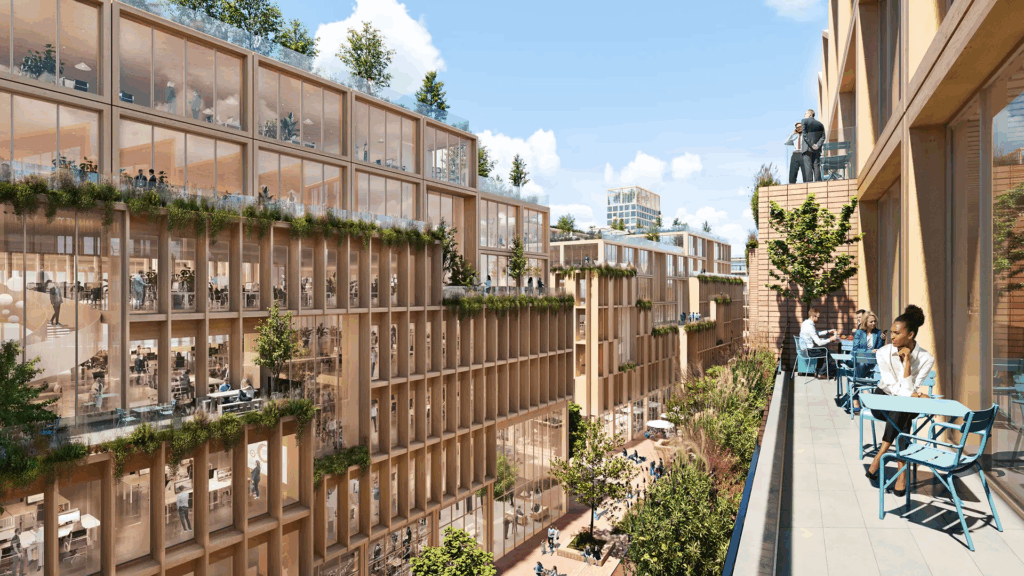
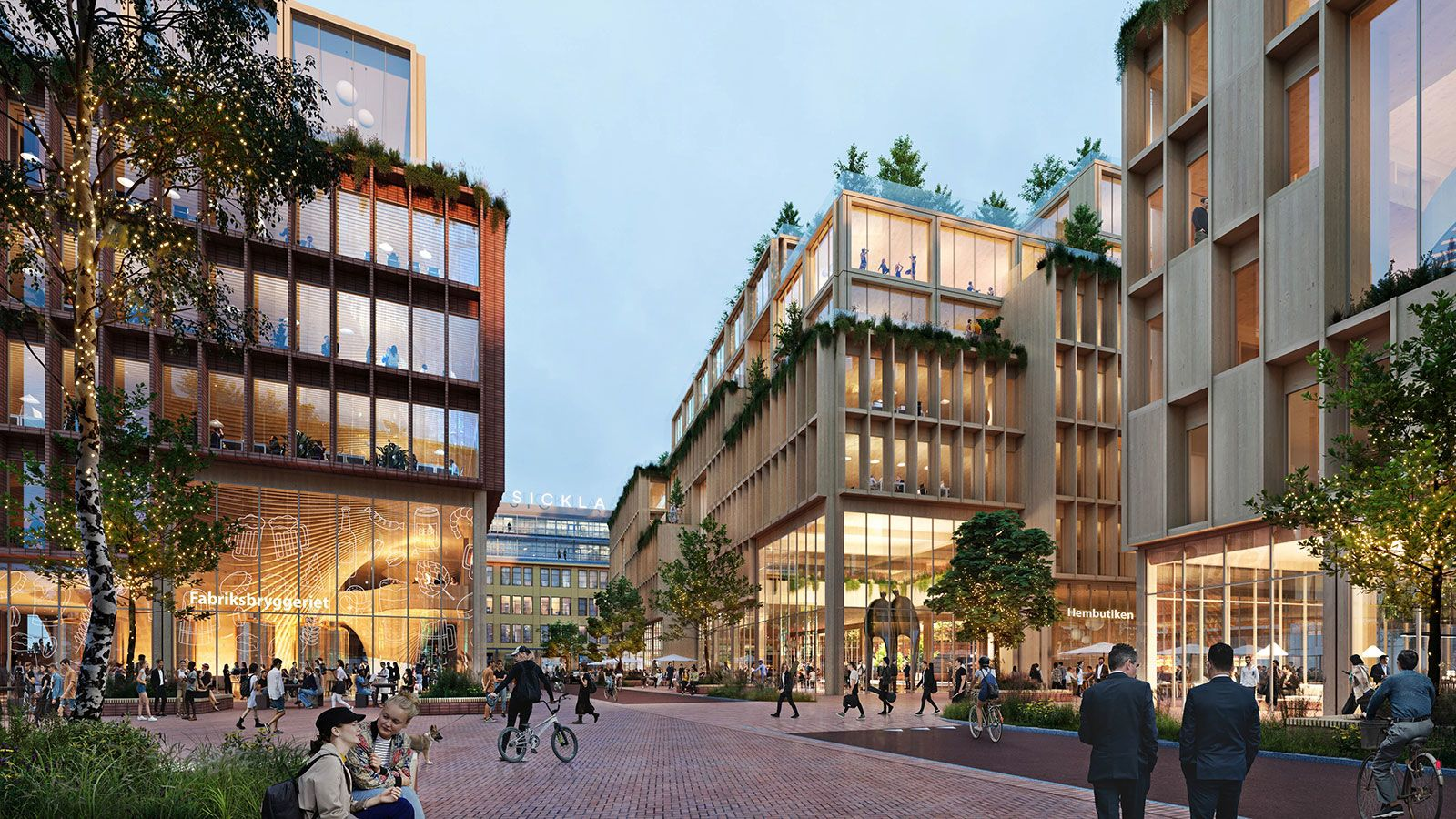

A bold new chapter in sustainable urban design is rising over the horizon of Stockholm’s Sickla district. Uniquely dubbed Stockholm Wood City, this unprecedented development will emerge as the largest wooden urban area in the world, covering a vast, 250,000 m² site fashioned from timber rather than steel and concrete. Construction is expected to begin in 2025, with 25 blocks of wooden architecture imagined to arrive over the next ten years, with buildings as early as 2027. The development has been commissioned by Atrium Ljungberg, with Nordic architects including White and Henning Larsen involved in the vision, and subsequently a place to live, work, shop, and have green roofs- not only as amenities, but as components of a climate-resilient urban story.
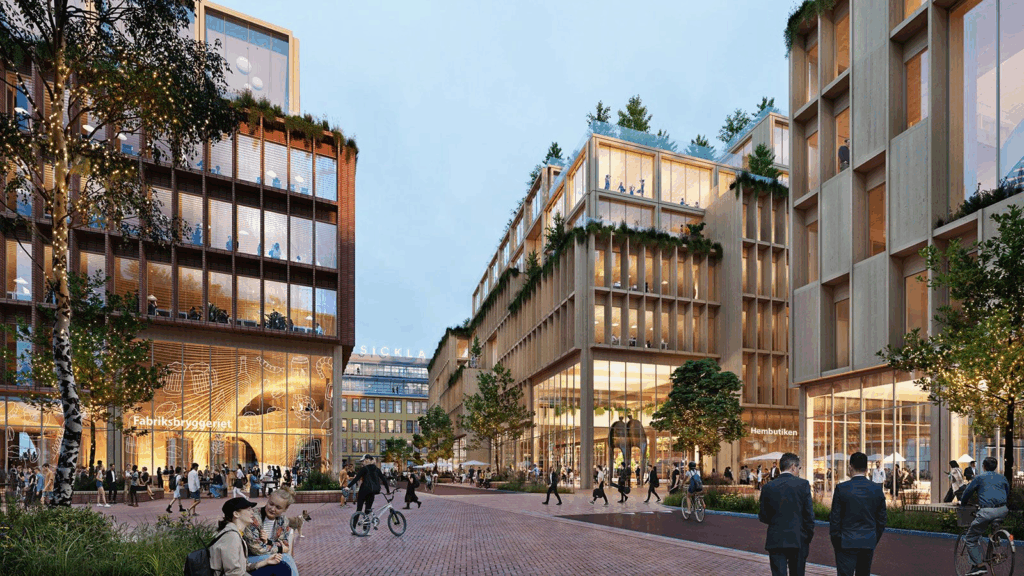
Stockholm Wood City is important not only for its scale but also in the way it challenges assumptions of modern architecture. In prioritizing wood over space, wood as an urban form creates a living carbon sink for the city. Timber construction inhibits the embodied emissions from building/maintaining structures, offers faster—and quieter—construction sites, and embraces warmth, air quality, and a palette of biophilic experiences with a Scandinavian-modernist aesthetic. All the while, its minimal form language expresses local vernacular to develop a new manner of how densely populated European neighborhoods may rise in accordance with nature.
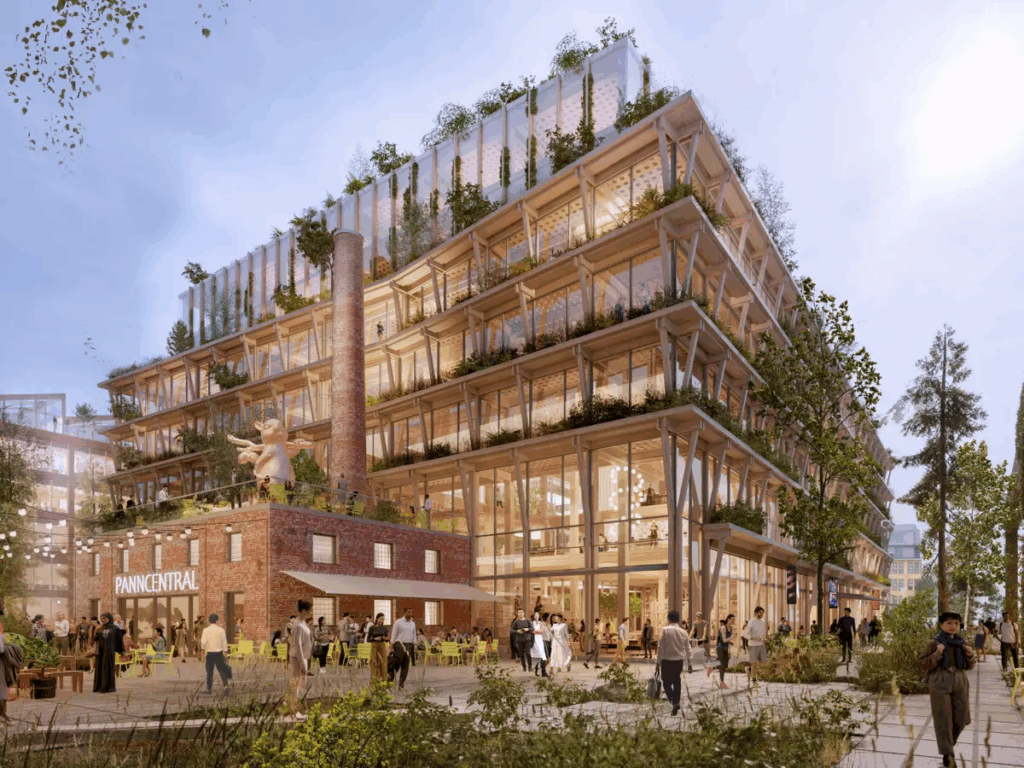
This is not just about materials—it revolves around urban culture. Once complete, Stockholm Wood City will house around 2,000 dwellings within 7,000 office spaces, shops, and restaurants—creating a vibrant timber-filled neighbourhood that, daily, shares a rhythm between living and building. It is a bold experiment in climate-responsive urbanism that challenges cities around the world to reconsider how durability—and beauty—may look in relation to one another in the 21st century.