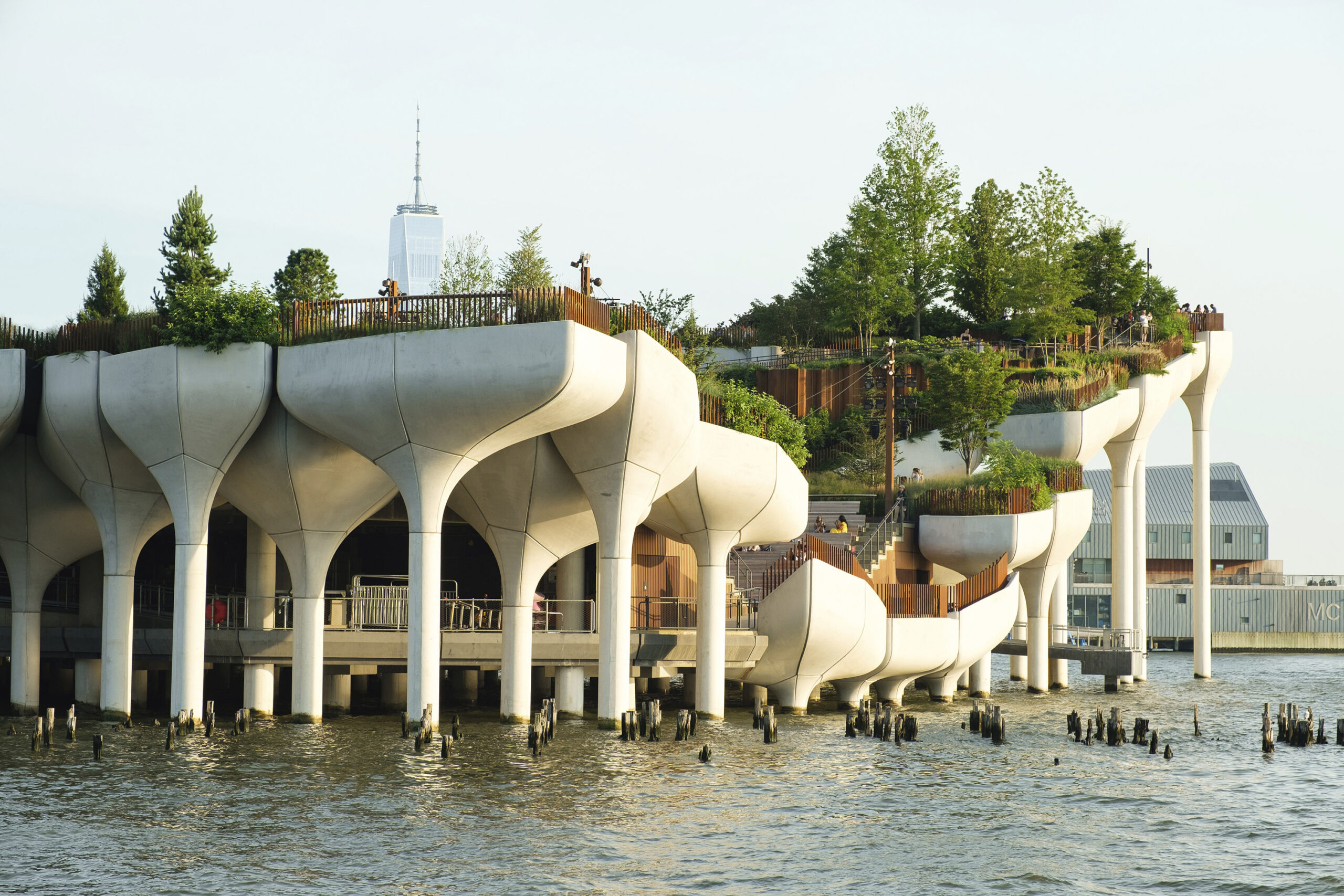

Just off the Chelsea waterfront on the west side of Manhattan, a small but remarkable park rises from the Hudson River. Little Island is a floating 2.4-acre public space created on the site of Pier 55, transforming a forgotten industrial cityscape into a vibrant civic landmark in NYC. Designed by Heatherwick Studio in partnership with Mathews Nielsen Landscape Architects, the park is as much an art installation as it is a landscape – with conceptual sculptural forms, ecological ideas, and community activities blended into one experience.
The real spectacle of the park is the rocky “tulip pots.” These are a series of 132 concrete sculptures that rise up out of the riverbed and support the undulating topography above. Each tulip pot is a different height, and some raise parts of the park structure above the Hudson River water. The landscape underneath is a small typology of hills and terraces. It overlooks views and vistas of the Manhattan skyline and opposite Jersey waterfront, while the sculptural nature of the park is whimsical. The ludicrousness of the design changes the aesthetic for urban resilience. This beautiful park represents an architectural vision of how engineered infrastructure can relate to the physical realities of climate and the imagination for a new urbanity.
Once you enter the park, you immediately feel immersed in a slice of urban nature that is worlds apart from the city’s concrete canyons. Over 350 species of trees, shrubs, and perennials bloom with the seasons to create an ever-changing sensory experience at Little Island. The curvy path also leads to intimate seating areas and graceful open lawns, and something fun and exciting is hidden behind an elevated perch created to watch a sunset after a long day striding across the Hudson River. At the centre of Little Island is The Amph, a 687-seat outdoor theatre space for concerts, theatre, and dance performances, all reinforcing Little Island as a multi-faceted civic space and cultural destination.
Little Island matters because it speaks to a change in how we are building public architecture in cities, moving from chasing height and monumentalism to the human scale, surprise, and play, and a relationship with nature. As a piece of adaptive reuse, Little Island provides new life to a part of disused infrastructure that would have disappeared entirely underwater. In some ways, Little Island recognizes that while larger urban design projects may appear to be the apparent future of urban design, the reality is that urban design may depend heavily on small, intentional, and repeated moments that reflect both the rhythms of urban life and the natural environment.
Now, as we look into the future, Little Island may inspire other coastal cities to think about their waterfronts as sites of resilience to climate and adaptability through joy and culture. Little Island, as a floating park, takes the merging of landscape, architecture, and the performance of public space as proof that even the most dense-built metropolis can create a moment of whimsy, wonder, and relationship to the water.